The Story
Why it exists.
The beginning
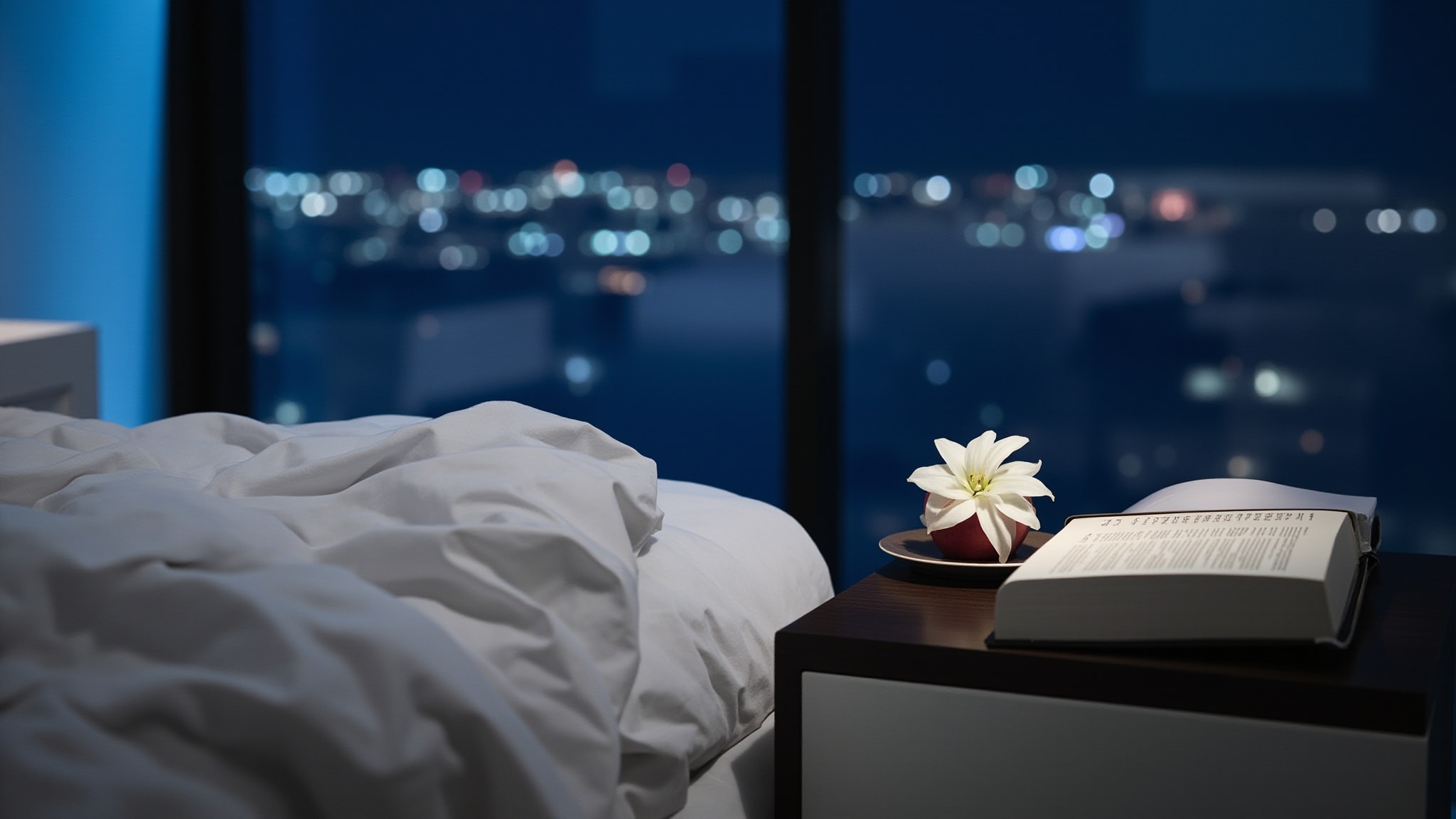
Oxford's Botanical Garden is one of the oldest in Europe, founded in 1621, tucked between the university colleges, full of plants that have been observed, catalogued, and studied for centuries. But what happens when the researchers leave and the gates close for the night? The flowers don't stop. Jasmine releases its scent after dark, when the air cools and the pollinators that prefer twilight come calling. While We Are Asleep is Sarah McCartney's translation of that specific moment, the garden continuing without its audience, doing exactly what it was always going to do whether anyone was watching or not.
The choice of white florals here isn't decorative, it's accurate. Jasmine, lily, and the supporting florals are the garden's actual night shift, the ones doing their most expressive work after sundown. Apple and pear don't read as fruit salad in this context; they read as the orchard at the garden's edge, grounding the extravagance in something real. Bamboo adds an unexpected greenness, not the sharp cut-grass green of daytime, but something softer, almost damp. The composition holds all of this together with bergamot at the opening and labdanum at the base, creating a structure that moves from citrus bright to full bloom to quiet close.
The evolution
The opening is bergamot first, a bright, clean citrus that announces the garden without overwhelming it. Within 15 minutes the white florals arrive, and jasmine makes its intentions clear immediately. This isn't a polite hello; it's the main character entering the room. The fruit notes (apple, pear) keep the florals honest, they could be showy, but instead they're grounded, almost natural. The heart holds for roughly two to three hours, and this is where the fragrance earns its name: jasmine and lily at full bloom in warm air, the whole composition soft and present without being announced. As the florals begin to quiet, the powdery notes emerge, iris and violet settling in, adding a softness that feels like petals at dawn rather than the confident bloom of midnight. The drydown is labdanum and whatever's left of the florals, warm and woody, intimate and close. This is a fragrance that stops projecting and starts whispering. It stays closest to the skin in its final hours, the kind of scent you'll catch on your own wrist and think, oh right, that.
Cultural impact
While We Are Asleep landed in 2025 as part of a house known for playful, concept-driven scents, the name alone signals an interest in atmosphere over statement. The Oxford Botanical Garden reference grounds it in a specific Englishness without becoming heritage perfume; it's contemporary, slightly literary, and more interested in mood than trend. White floral fragrances have cycled in and out of fashion for decades, but this one arrives at a moment when the category is being reconsidered, less powdery grandmother, more confident and intimate. For a brand built on democratic access and experimentation, it's a fragrance that invites curiosity without requiring expertise.