The Story
Why it exists.
The beginning
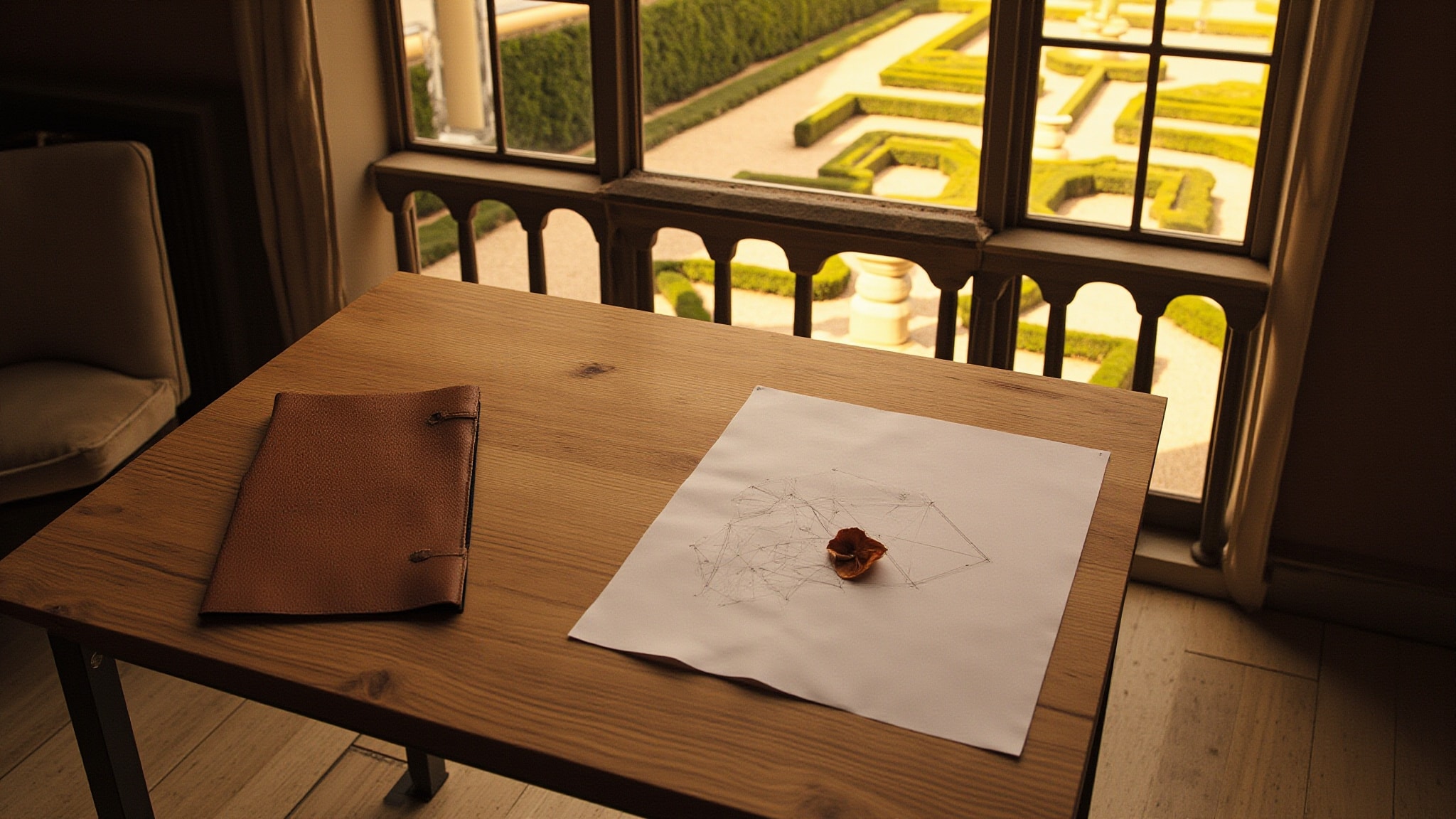
Amboise is named for the Renaissance castle that overlooks the Loire River in France, a residence of the Valois dynasty and the final home of Leonardo da Vinci. The chateau sits above the water, its gardens the first formal parterre in France, a deliberate break from medieval logic, an embrace of geometry and light. Smoke, rose, leather, and a lingering sweetness form the composition, each note threading into the next. The incense foundation carries a resinous warmth that anchors the brighter elements, while the rose adds a soft, floral counterpoint that keeps the smoke from becoming too heavy. Leather appears as the base develops, giving the fragrance depth and a quietly aged quality.
Pomegranate and cedar share the heart of this composition, fruit and wood in conversation rather than competition. The pomegranate brings a tartness that shifts the direction of the incense rather than reinforcing it, and the cedar stands dry alongside, offering a counterweight to any sweetness waiting in the base. The fragrance is not linear. It does not arrive and stay fixed. The structure pulls attention toward the middle act, where many compositions either settle or fall apart. Amboise instead reconfigures.
The evolution
The opening arrives with incense and citruses together, smoke and brightness in immediate conversation. The rose follows, and this is where the fragrance makes its first case: it is not a dark scent. The citruses continue to lift, continuing to pull the smoke upward. Amboise reads as luminous in its early stages, the brightness sustained rather than immediately shadowed. The pomegranate arrives and does not sweeten the composition; it tartens it, adding a sour edge that shifts the mood from garden to something more interior. The cedar is dry and present. Together these notes take the brightness the citruses provided and route it somewhere less obvious. Leather emerges from the base and takes a leading role, amber giving it warmth, musk giving it presence on skin, and the combination holds.
Cultural impact
The castle at Amboise is not the most famous of the Loire chateaux, but it is among the most layered, Renaissance ambition built on medieval bones, Leonardo's presence lending intellectual weight to architectural grandeur. The fragrance occupies similar territory: not the loudest, not the most cited, but built with enough structural intelligence that it rewards attention. Wearers who connect with it tend to return to it as an evening alternative when mainstream masculine fragrances feel insufficient.