Jacques Flori
Jacques Flori began at Robertet in 1973, taking his first steps as a perfumer's assistant before rising through the ranks to become one of the house's most celebrated noses. Born in France, he initially pursued studies in medicine before his path curved toward the alchemy of scent. His technical rigor, shaped by that scientific foundation, set him apart early on. Throughout his career, Flori's work took him across the globe, including extended projects in Indonesia, where he immersed himself in local raw materials and aromatic traditions. This international exposure deepened his understanding of rare ingredients and broadened his compositional vocabulary. After more than five decades at Robertet, Flori has earned the quiet authority that comes from mastering one's craft over generations rather than seasons. He remains a reference point for perfumers seeking technical excellence and structural precision.
The hits
Notable creations










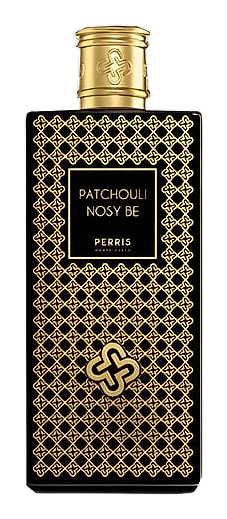

The signature
How Jacques composes
Flori built his reputation on complex incense compositions, demonstrating a particular affinity for resins, woods, and aromatic woods that carry smoke and sacred weight. His technical background expresses itself in precise layering and meticulous longevity engineering. He gravitates toward natural materials of depth and character, often sourcing and evaluating ingredients personally during his international work. His formulations favor transparency over opulence, allowing individual notes to remain legible within richer accords. This clarity makes his work distinctive even in dense compositions, giving wearers something to discover rather than simply experience.
Philosophy
What drives Jacques
Flori approaches fragrance as an architect approaches a building: every element must bear weight, every proportion must earn its place. His work prioritizes coherence over spectacle, favoring scents that reveal their logic slowly rather than announcing themselves immediately. He believes a great fragrance should feel inevitable in hindsight, as though no other arrangement of materials could have existed. His global projects taught him that scent is also cultural conversation, and he brings that awareness to each brief, treating constraints not as limitations but as the conditions that give a fragrance its identity.
The houses