Watermelon Candy
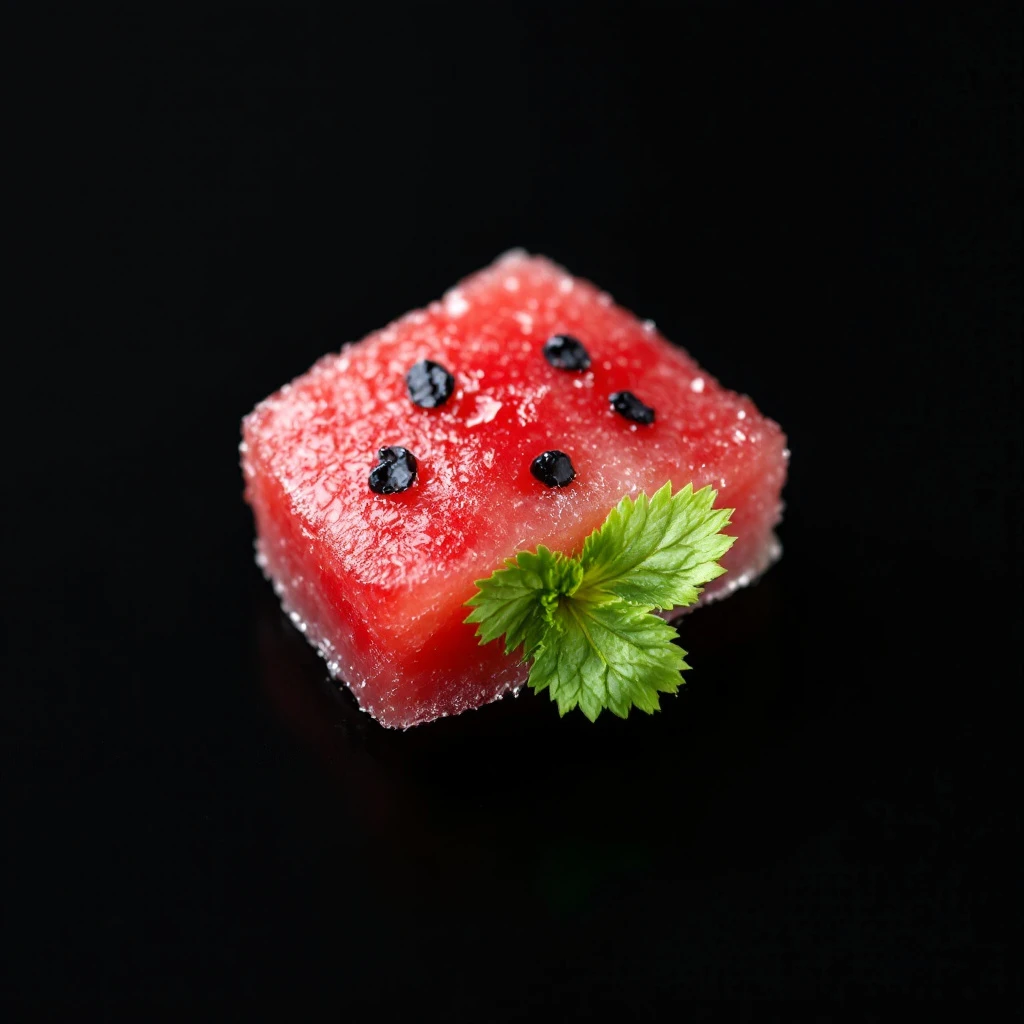
Watermelon candy is a synthetic accord that captures the sugary, syrupy sweetness of confectionery rather than fresh fruit. It delivers an immediately nostalgic, bright, and playful sweetness prized in modern gourmand perfumery.
Character
How it smells
Pure sugar rush in a bottle
True watermelon aroma cannot be extracted from the fruit itself, so perfumers rely on a compound called Calone, first synthesized in the 1950s, to recreate that candy-like juiciness.
Pairs beautifully with
Origin
France
Watermelon itself traces back to Central Africa, where wild varieties grew thousands of years before cultivation spread to Egypt, the Mediterranean, and eventually China by the 10th century. The fruit held symbolic meaning in ancient Egypt as a source of hydration in tombs and was documented in Greek and Roman agricultural texts. However, the candy interpretation in fragrance has nothing to do with that ancient history.
The breakthrough came in the 1950s when a perfumery chemist synthesized Calone, a marine-ozonic compound that, in small doses, produces an unmistakable watermelon rind impression. For decades it was considered too unusual for fine fragrance. In the 1990s, perfumers began combining Calone with sweet gourmands to imitate the taste of watermelon bubble gum and Jolly Rancher-style candy, sparking a wave of fruity fragrances that defined the early 2000s.
Today, watermelon candy remains shorthand for youthful, playful sweetness in modern perfumery, bridging the gap between childhood confections and adult scent wardrobes.
Wears it best
Fragrances featuring Watermelon Candy
Brands
Brands known for Watermelon Candy
Good to know
Questions, answered
The essentials on Watermelon Candy in perfumery: how it smells, where it comes from, and how it behaves on skin.
Is watermelon candy a natural fragrance ingredient?
No. Watermelon candy is a synthetic accord. Fresh watermelon cannot be practically extracted for perfumery because its aroma compounds are water-soluble and degrade within minutes of slicing, so chemists build the scent in a laboratory.
What does watermelon candy smell like in perfume?
It smells sugary, syrupy, and intensely sweet, evoking pink bubble gum or Jolly Rancher candies rather than fresh fruit. The accord typically carries a slightly powdery, candy-shop character layered with bright juiciness.
When was the watermelon note first used in perfumery?
The foundational molecule Calone was first synthesized in the 1950s, but the candy-sweet watermelon interpretation became popular in mainstream fragrance during the mid-1990s gourmand wave.
Where does real watermelon originally come from?
Wild watermelon originated in Central Africa, where it still grows in its pure form. Archaeological evidence places cultivated watermelon in Egypt and the Mediterranean by at least 2000 BCE.
Is watermelon candy safe to wear on skin?
Yes. The aroma chemicals used to construct the accord, including Calone and ethyl methylphenylglycidate, are approved for cosmetic use by the International Fragrance Association (IFRA) at standard concentrations.
What perfumes are known for the watermelon candy note?
Watermelon candy became iconic through late-1990s and early-2000s fruity fragrances, particularly those targeting youthful markets, and it continues appearing in modern gourmand releases seeking a playful, sugary character.
How is watermelon candy different from fresh watermelon note?
Fresh watermelon notes are rare and rely on synthetic molecules to approximate the watery, green-rind scent. Watermelon candy pushes sweetness much further, adding syrupy, powdery, and confection-like facets absent from the real fruit.
Why is watermelon candy so popular in affordable fragrances?
Because the accord is built entirely from synthetic molecules, production costs stay low and batch-to-batch consistency remains reliable, making it an economical choice for youthful, gourmand fragrance lines.





