Jasmina Grandiflorum
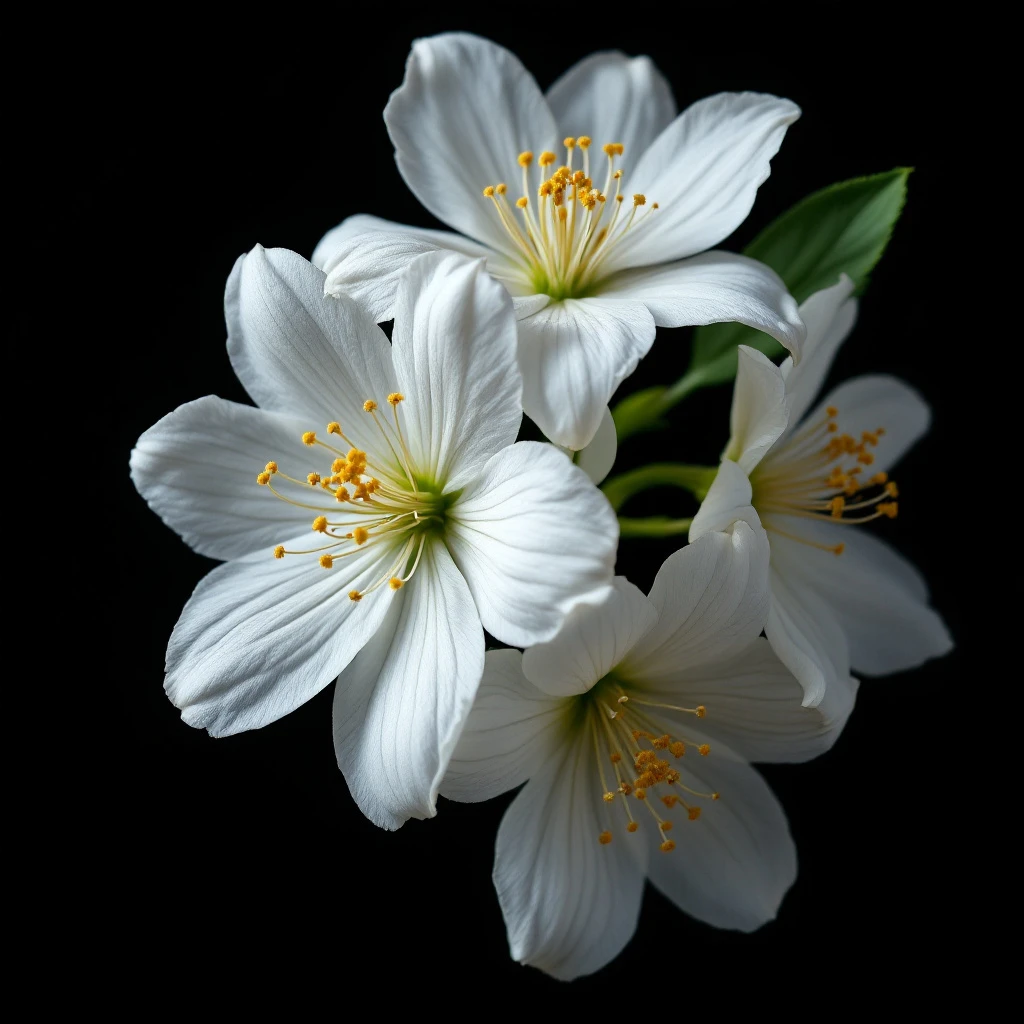
Jasmine Grandiflorum absolute carries the intoxicating, indolic warmth of freshly picked blossoms at dawn, a scent so rich and narcotic that perfumers call it the king of white flowers in fine fragrance.
Character
How it smells
Eight thousand blossoms distilled into a single gram of absolute.
It takes roughly 8,000 hand-picked jasmine blossoms to produce one gram of absolute, which is why genuine Grandiflorum extract remains among the most expensive perfume ingredients on Earth.
Pairs beautifully with

Origin
India
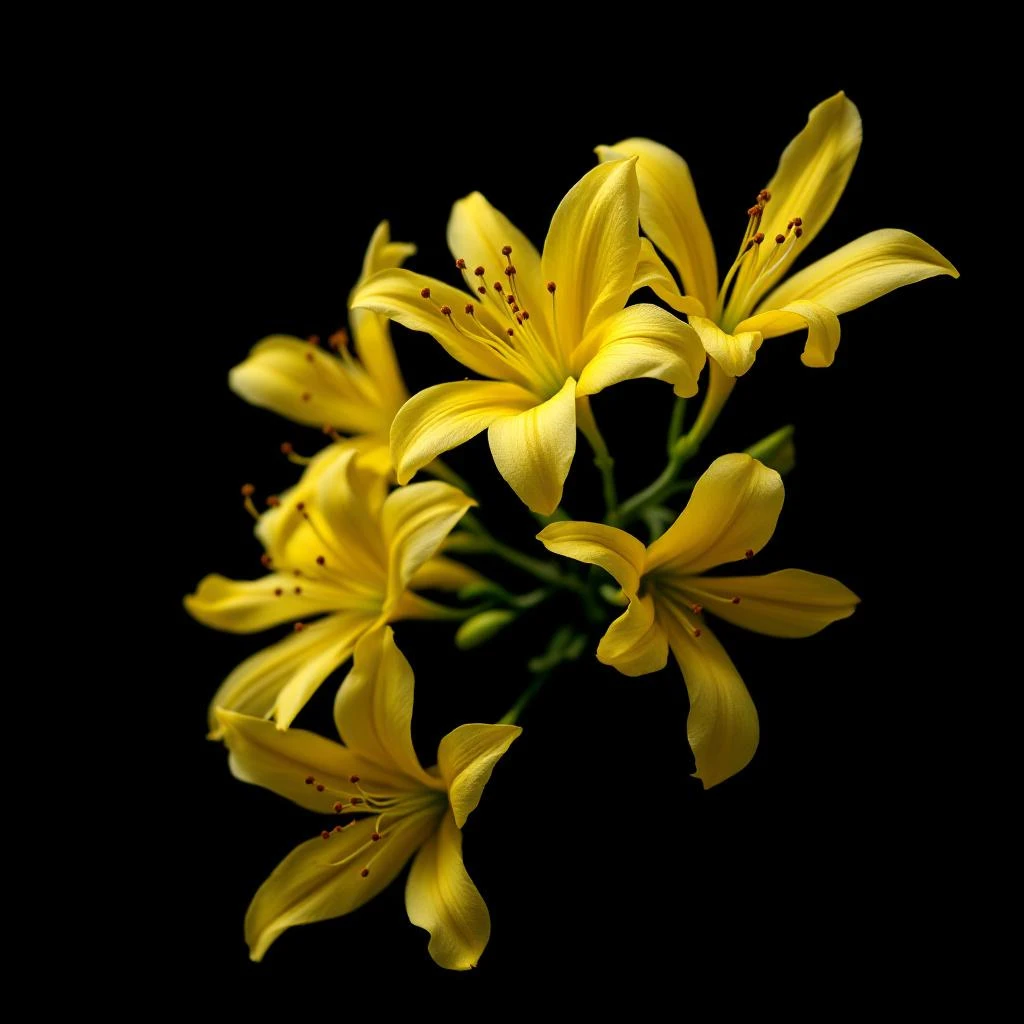
Jasmine Grandiflorum, or Jasminum grandiflorum, traces its botanical lineage to the Himalayan foothills of northern India and the Kashmir region, where it was first cultivated for ornamental and ceremonial purposes before spreading along ancient trade routes. The Moors carried jasmine into Spain during the eighth century, and by the sixteenth century it had reached Grasse, the French town that would become the spiritual home of modern perfumery. In the 1600s, Grasse tanners discovered that the flowers could mask the smell of leather, which sparked a regional industry in aromatic raw materials.
By the nineteenth century, jasmine had become the crown jewel of Grasse production, with vast fields surrounding the town and entire families employed in the harvest. The flower inspired legendary compositions, from Jean Patou's 1930 creation to countless modern florals. In 1962, a Swiss fragrance house synthesized Hedione, a jasmine-derived molecule with a luminous, transparent quality.
This discovery democratized jasmine's radiant facets, allowing perfumers to evoke its brightness without relying solely on costly natural absolute.
Wears it best
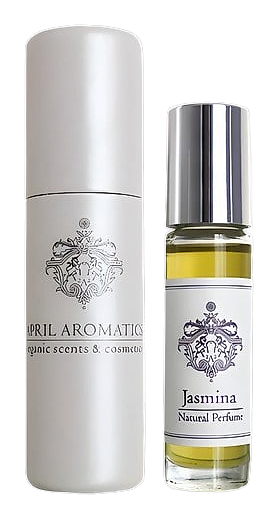
Fragrances featuring Jasmina Grandiflorum
Brands
Brands known for Jasmina Grandiflorum
Good to know
Questions, answered
The essentials on Jasmina Grandiflorum in perfumery: how it smells, where it comes from, and how it behaves on skin.
What does Jasmine Grandiflorum smell like?
Jasmine Grandiflorum absolute smells intensely floral, warm, and indolic, with creamy, fruity undertones reminiscent of ripe banana and a slightly animalic depth. It is richer and deeper than Jasmine Sambac, which leans more toward green and orange blossom sweetness.
How is Jasmine Grandiflorum absolute extracted?
The primary method is solvent extraction. Fresh petals are washed with hexane to produce a waxy concrete, which is then treated with alcohol to yield the pure absolute. The traditional enfleurage method, using fat to absorb the scent, is now rare but still practiced in Grasse.
Where does Jasmine Grandiflorum originally come from?
Jasminum grandiflorum originated in the Himalayan region of northern India and surrounding areas. It spread westward through trade routes, reaching Grasse, France, by the sixteenth century, where it became a cornerstone of European perfumery.
Why is Jasmine Grandiflorum so expensive?
It requires approximately 8,000 hand-picked blossoms to yield one gram of absolute. The flowers must be harvested at dawn before opening, and only seasonal labor can perform this delicate work, driving production costs exceptionally high.
What is the difference between Jasmine Grandiflorum and Jasmine Sambac?
Grandiflorum offers a richer, more indolic, almost narcotic profile with fruity and animalic facets. Sambac, the variety used in jasmine tea, presents a fresher, greener, more camphoraceous character with brighter orange blossom nuances.
When was Jasmine Grandiflorum first used in perfumery?
Jasmine reached Grasse in the 1500s and became central to French perfumery by the 1800s. Its commercial use exploded in the early twentieth century, defining iconic florals from Jean Patou to contemporary niche houses.
What is Hedione and how does it relate to jasmine?
Hedione, synthesized in 1962 by a Swiss fragrance house, is a jasmine-derived molecule with a radiant, transparent citrus-honey character. It allowed perfumers to capture jasmine's luminous brightness affordably, reshaping modern floral composition.
Can Jasmine Grandiflorum be grown outside India and France?
Yes. Commercial cultivation now extends to Egypt, Morocco, and parts of Southeast Asia. Egyptian jasmine absolute is widely produced, though Grasse and Indian extracts remain the benchmarks for quality in luxury perfumery.




