
The Story
Why it exists.
The beginning
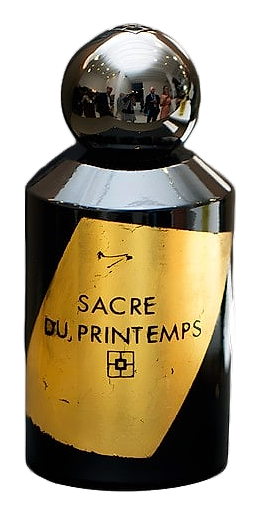
The name is a direct tribute to Stravinsky's 1913 ballet, "The Rite of Spring", a piece so disruptive it reportedly started a riot at its premiere. This fragrance, released in 2014, translates that same energy into scent: primal, rhythmic, demanding attention. The composition holds nothing back in its opening movement, establishing its character with forceful intent before revealing the complexity underneath.
The structure is unusual for a green fragrance. Where most open bright and recede, Sacre du Printemps starts confrontational, galbanum and angelica root colliding with an almost astringent force that arrests the senses. The green notes are sharp, almost medicinal in their intensity, cutting through the air with purpose. Only gradually does the smoke from guaiac wood emerge as the dominant character, a warm, resinous haze that slowly overtakes the initial sharpness. What remains is vetiver and wood, earthy and persistent, refusing to become polite or subdued as the fragrance develops.
The evolution
The opening hits like a wrong note in a quiet concert hall, unexpected, electric. Galbanum leads, sharp and green, almost medicinal in its intensity. Within minutes, a subtle fruitiness surfaces, softening the blow without becoming sweet. Then smoke arrives, not from incense but from guaiac wood, a warm, resinous haze that gradually overtakes everything. The heart is where this lives for most of its life: vetiver's earthy root, angelica's herbal musk, guaiac's smoky embrace all interweaving in a complex mid-section that rewards patience. The drydown is subtle, woodsmoke fading to a faint green-vetiver memory on fabric long after you've left the room, lingering on clothing and in the air as a quiet reminder of its presence.
Cultural impact
Sacre du Printemps takes its name directly from Stravinsky's infamous ballet, and that influence runs through the fragrance's very structure. The composition moves with a sense of confrontation and release that mirrors the music's famous premiere, where disruption became part of its identity. Those who connect with it tend to hold onto it, finding in its unconventional approach something worth returning to again and again. It's not for every occasion or every nose, but for those who appreciate its particular language, it offers something distinctive.