The Story
Why it exists.
The beginning
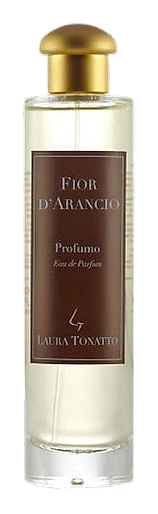
Fior d'Arancio takes its name from the Italian for orange blossom, and that flower is the entire point. Laura Bosetti Tonatto built this fragrance around a single botanical family, letting the blossom speak without apology or elaboration. The name is not a metaphor. It is the ingredient, elevated. Drawing from her deep knowledge of aromatic materials and manufacturing processes developed since the 1980s, she constructed a soliflore that honors Italian perfumery tradition without retreating into nostalgia for it. Orange blossom absolute carries both sweetness and a green, slightly bitter edge, qualities that tonatto separates deliberately, letting each register its presence rather than blending into a smooth blur. The result is a white floral that feels precise. Italian restraint applied to a material that could easily become sentimental. Fior d'Arancio arrives without fanfare. No campaign narrative, no celebrity endorsement.
The aldehydes are the technical argument here, not a nostalgic callback, but a deliberate structural choice. They function as a diffuser for white florals, lifting them away from skin and preventing the sweetness from becoming cloying. Orange blossom, ylang-ylang, and jasmine can read as heavy in the wrong composition. The aldehydes keep Fior d'Arancio honest. What makes this work is the tension between vintage structure and contemporary restraint. The aldehydic backbone places it in conversation with mid-century classics, but the orange blossom freshness prevents it from reading as dated.
The evolution
The opening is aldehydes first. Sparkling, slightly bracing, with African orange blossom asserting itself immediately, that characteristic bitter-sweet orange quality arriving without delay. The aldehydes provide lift, preventing the orange blossom from feeling syrupy. This top phase holds for roughly the first hour. The heart arrives as the aldehydic brightness begins to soften. Ylang-ylang thickens the composition, jasmine adds depth, and lily of the valley introduces a green, almost dewy quality that keeps the white florals from reading as purely sweet. The transition is not dramatic, more a slow shift in texture, like turning from a fresh morning bloom into flower water. The base settles into white musk and the ghost of aldehydes. Four to six hours in, the florals have become a soft, intimate presence, close to the skin, present without projecting. The aldehydic sparkle fades to a whisper; the white musk keeps the florals anchored. On fabric, the scent can linger into the following day as a clean, floral-soap impression.
Cultural impact
Tonatto Profumi occupies a particular space in Italian perfumery, serious without being austere, crafted without being inaccessible. Fior d'Arancio sits comfortably within that positioning: a white floral aldehydic that speaks to a wearer who values composition over novelty. The aldehydic backbone places it in conversation with the great floral aldehydics of the twentieth century, but the orange blossom freshness keeps it from reading as period piece. It is a fragrance for someone who wants Italian craft, white florals done properly, and a quiet intelligence in their fragrance choices, not volume, not trend, just the blossom.