
The Story
Why it exists.
The beginning
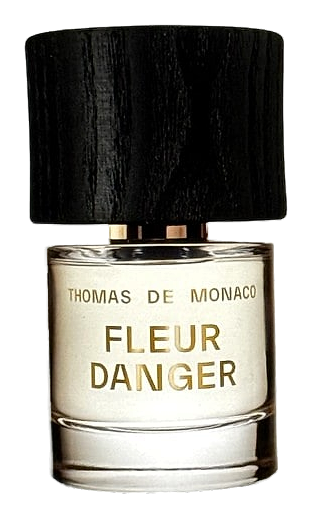
Thomas de Monaco approaches fragrance like a photographer frames a shot, light, shadow, the moment before something changes. When perfumer Ugo Charron brought the brief for Fleur Danger in 2025, the conversation started with an unusual word: silver. Not silver notes, not metallic accords, the idea of silver itself. Shiny, cold, precise. Something forged rather than grown. The name came from that tension. A fleur that should be delicate. A danger that should be violent. Instead: steel-wrapped petals, synthetic sweetness held in place by aldehydes that read more industrial than nostalgic. The collaboration pushed both men into unfamiliar territory, a fragrance that photographs well and smells like it survived something.
The inclusion of Suederal® and Orcanox™ signals where this composition lives, not the botanical garden, but the lab that mimics it. These synthetic molecules don't replicate a natural material; they build something that never existed in nature but reads immediately as familiar, cold, almost sterile in the best way. The aldehydes do the same thing in reverse: they're the oldest trick in perfumery, lifted here into something clinical and modern. Then there's the Gurjum balsam and Indian sandalwood in the base, warm, resinous, almost traditional. The contrast isn't accidental. It's the whole argument.
The evolution
The opening lands like cold air on skin, aldehydes and pink pepper upfront, bright and almost sharp enough to make you step back. Raspberry arrives quickly, tart and synthetic-sweet, which sounds like a contradiction but reads as modern fruit, not a fruit salad. For the first thirty minutes, this smells like the inside of a new camera lens: clean, precise, cold. The heart shifts slowly. Saffron and aldehydes deepen into something leather-adjacent, not actual leather, but the memory of leather, the warmth that comes from skin underneath metal. Suederal adds a cool, almost powdery metallics that doesn't fade. By hour three, the rum absolute has emerged, sweet and warm against the persistent coolness of the steel accord. They sit together, warm and cold, for hours. The drydown is where most fragrances give up. Fleur Danger doesn't. The Indian sandalwood and Gurjum balsam settle into a warm woody base that lingers close to the skin, intimate rather than announcing itself. On fabric, it lasts until the next wash.
Cultural impact
Fleur Danger sits in the category of fragrances that refuse easy classification, neither purely synthetic nor traditionally natural, neither warm nor cool, neither floral nor leathery. The aldehydic-steel opening puts it in conversation with compositions that use metallics as more than a novelty, and the warm rum-and-sandalwood drydown anchors it in a warmth that readers will recognize. What sets it apart is the sustained tension between those two states, the cold never fully wins, the warmth never fully takes over. For wearers who've grown restless with safe florals or predictable spicy woods, this is the kind of lateral move that makes the category interesting.