
The Story
Why it exists.
The beginning
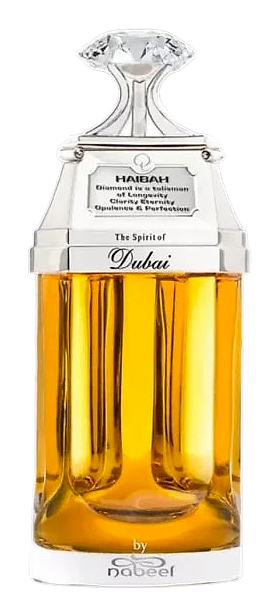
Shumukh was conceived as a tribute, the name itself means deserving the highest in Arabic. For The Spirit of Dubai, that phrase became both aspiration and challenge. Could a fragrance earn that title? The answer arrived in 2019: a composition built on the region's most revered materials, crafted by perfumer Asghar Adam Ali. Indian oud anchored the structure. Omani frankincense provided the spiritual dimension. Turkish rose and Madagascan ylang-ylang added floral depth that refused convention. The result was a scent that didn't whisper its intentions.
The pyramid tells its own story of layering. Heart notes, oud, frankincense, patchouli, sandalwood, ylang-ylang, rose, amber, musk, don't arrive in sequence. They arrive together, then gradually separate over hours as the top notes fade. This creates an unusual effect: the first hour feels like standing inside the material itself, dense and enveloping. Only later does the architecture reveal itself, with the florals lifting first and the oud-sandalwood base becoming the last thing the skin remembers. It's a composition that trusts time to do what immediacy cannot.
The evolution
The opening arrives with force, bergamot, pink pepper, cinnamon, and a lavender note that adds an almost fougère greenness. The effect is bright and medicinal, like stepping into a perfumer's workshop where raw materials are still being weighed. Within 30 minutes, the florals assert themselves: jasmine sambac over Turkish rose, with ylang-ylang adding a tropical richness that could tip into cloying if the other notes weren't holding it in place. They hold. The oud and frankincense arrive around the one-hour mark, and this is where Shumukh becomes itself. The incense smoke curls around the rose, the oud adds its dark resinous depth, and patchouli grounds everything in a cool earthiness. This phase lasts. The drydown, when it comes, doesn't announce itself. The florals fade first, then the spices. What remains is a quiet oud-and-musk foundation, ambergris adding its marine-animalic warmth, cedar and tonka bean providing a soft woody-sweet closing. On fabric, this base can last into the next day.
Cultural impact
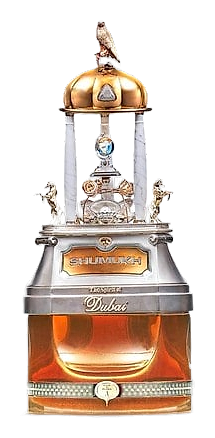
Shumukh arrived in 2019 with a Guinness World Record and a price tag that sparked conversation far beyond fragrance circles. It forced a question: what does the world's most expensive perfume smell like? The answer divided opinion. Some found it bold and beautiful, a genuine achievement in oud composition. Others saw it as spectacle over substance. But Shumukh succeeded anyway. It wasn't selling a fragrance so much as a statement. The 3-liter bottle, the diamonds, the record, these made it a cultural artifact. And the scent itself? For those who wore it, the animalic warmth and the oud-sandalwood base became the real story. Not the price tag. The smell.