The Story
Why it exists.
The beginning
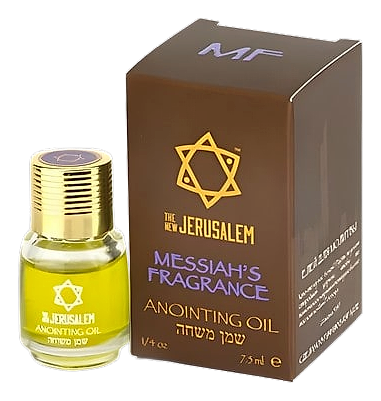
Messiah's Fragrance carries one of the most directly sacred names in The New Jerusalem's catalog. The composition draws on materials with scriptural resonance: olive, myrrh, cassia, aloe, all rooted in the Holy Land botanical tradition that runs through the brand's work. It reads as an anointing rather than an accessory, grounded in the botanical references found across biblical text. The olive note brings a green, almost vegetal weight, the kind of aroma you get from crushing a leaf between your fingers in a sun-warmed garden. The myrrh and cassia contribute a resinous density, each material distinctive in its own register. Together the materials create a layered composition that feels rooted in place.
What makes the composition structurally interesting is the collision of two registers most fragrances keep separate. The olive and oily notes bring a green, almost culinary weight, the kind of aroma you get from crushing a leaf between your fingers in a Mediterranean garden. The myrrh and cassia arrive as resin, dense and unmistakable. Together they create an aromatic backbone that reads less like conventional perfumery and more like something pulled from an apothecary shelf. The citrus zest and vanilla orchid soften the edges just enough to keep it on skin rather than in a drawer.
The evolution
The opening is where this fragrance does its most surprising work. Citrus zest hits first, bright and immediate, lifting off the skin in a clean burst. Within minutes the olive and oily notes push through, and the whole thing pivots from fruit-clean to something earthier and more textured. The heart settles into a slow conversation between myrrh and cassia, resinous and warm with a faint bitter edge, while aloe softens the transition and the vanilla orchid introduces a barely-there sweetness underneath. As the composition wears on, it becomes quieter and more inward-turning. The woody and orchid base holds the structure, but the fragrance draws closer to the skin as the hours pass rather than projecting outward. The myrrh deepens into something denser, almost smoky in its restraint, while the olive note fades to a soft green hum underneath.
Cultural impact
The materials at the core of Messiah's Fragrance, olive, myrrh, and cassia, all carry ancient scriptural resonance. Each appears across biblical text in contexts ranging from daily ritual to sacred anointing, giving the composition a layer of meaning that reaches beyond its aromatic profile. Myrrh in particular has a long history as a devotional material, appearing in temple rites and burial preparations across centuries. Cassia, similarly, shows up in scriptural references to holy anointing oil alongside myrrh and cinnamon. Olive carries its own weight, present in both domestic and sacred contexts throughout the Holy Land tradition.