The Story
Why it exists.
The beginning
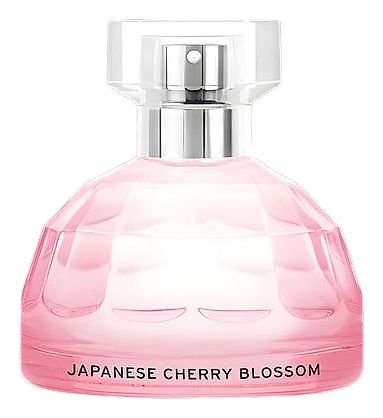
Japanese Cherry Blossom arrived in 2012 as part of The Body Shop's Scents of the World collection, five fragrances, each built around a single ingredient sourced from a specific corner of the globe. The brief was clear: take the olfactory identity of a place and distil it into something wearable. For this entry, the place was Japan in spring. The ingredient was sakura. Perfumers Arnaud Winter and Constance Georges-Picot weren't interested in replicating a landscape photograph. They wanted to capture the feeling of standing underneath a cherry tree, that specific silence when everything is falling and you can't decide if it's sad or perfect.
The structure is deceptively simple. Fuji apple opens, then magnolia, then osmanthus, a trio that could read generic if the cherry blossom didn't anchor everything that follows. The genius is in the base. Hinoki cypress is not the wood you'd expect. It's not cedar's warmth or sandalwood's cream. It's dry, meditative, almost austere. That contrast, the ephemeral softness of petals against something ancient and still, is what keeps this from smelling like air freshener. The osmanthus matters too. It's the apricot note hiding in the middle, the thing that makes 'fruity' feel grounded instead of sweet.
The evolution
The oil format changes everything. Where an EDT would project and fade within a few hours, the perfume oil keeps things close, a slow diffusion that stays within arm's reach rather than announcing itself across a room. The opening arrives quickly: Fuji apple and magnolia bright and crisp, the osmanthus warming almost immediately underneath. The cherry blossom doesn't hit for another ten minutes or so, but when it does, it doesn't take over. It settles. The whole composition softens into something that feels less like a fragrance and more like a memory of one. The hinoki base takes its time. It doesn't arrive so much as reveal itself, dry wood appearing around the edges once the florals begin to thin. The drydown is the longest phase, three to four hours of cherry blossom and hinoki intertwined, neither quite winning. On fabric, the whole thing lasts longer. On skin, it becomes intimate faster. Either way, it doesn't overpower. It accompanies.
Cultural impact
Japanese Cherry Blossom occupies a specific space in The Body Shop's catalog, entry-level floral, accessible in every sense. It's the fragrance that introduces someone to The Body Shop's ethical positioning before they even know what they're smelling. Community feedback consistently describes it as a gateway scent: people who loved it in their twenties return to it decades later, not out of nostalgia but because the composition holds up.