The Story
Why it exists.
The beginning
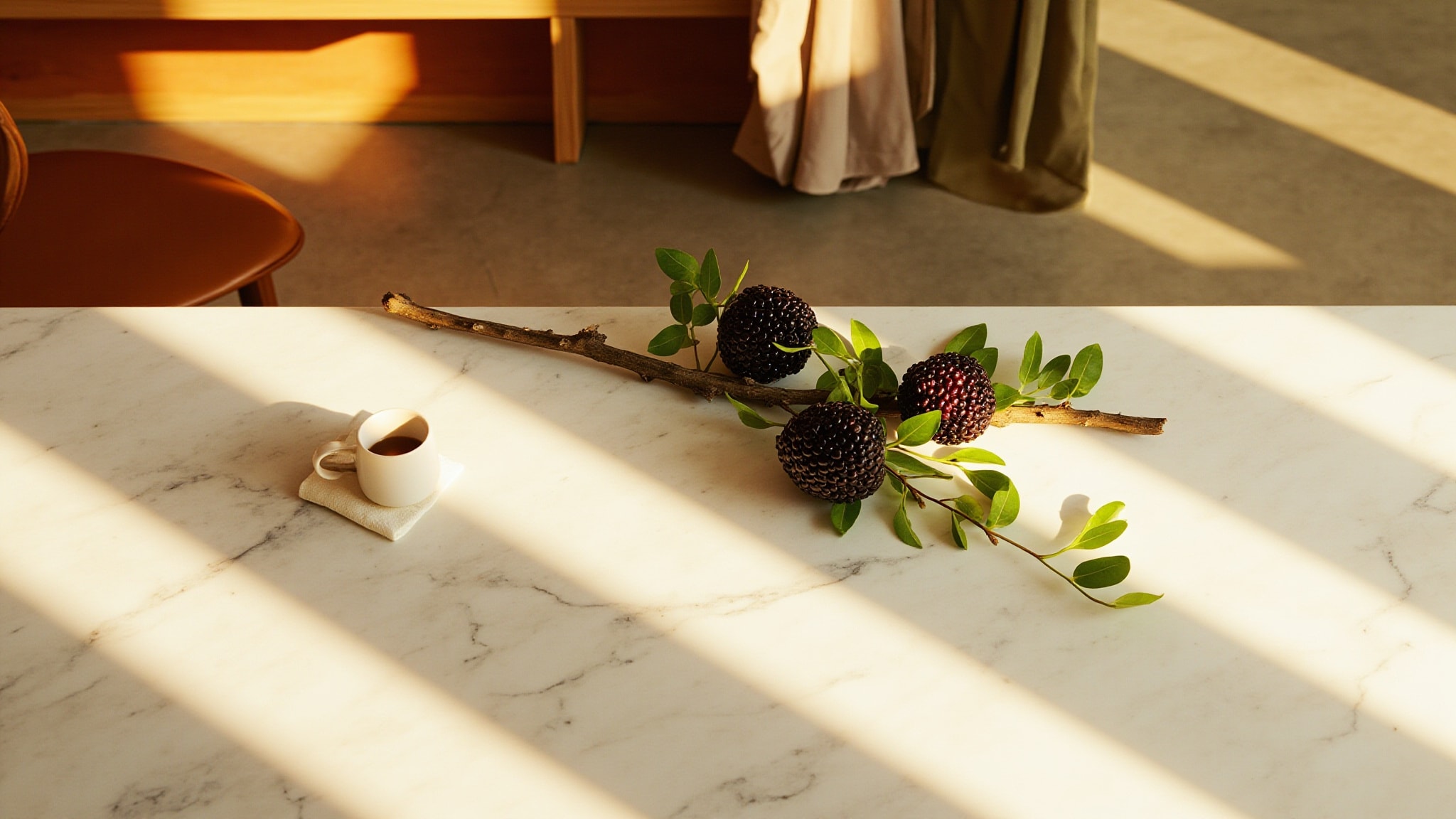
Jabuticaba takes its name from a Brazilian tree that does something most trees don't: it flowers and fruits directly on its trunk and branches, purple-black spheres clustering against rough bark like they've decided the rules don't apply. The name is no abstraction. It's a single plant, rendered from leaf to blossom to wood, and the composition sets out to honor every part of that cycle. The leaf leads with a green that feels almost architectural, structural rather than decorative, holding the opening in place before the floral ever shows up. When the blossom arrives, it stays quiet, woven into the green rather than overwhelming it, the kind of floral that prefers proximity to projection.
What makes Jabuticaba interesting is its restraint. The green of the leaf dominates the opening, not the sugar of the fruit. The blossom stays structural rather than decorative, refusing to bloom into the kind of floral that flatters at all costs. And the base commits to wood, not caramel or vanilla, which means the drydown reads closer to a forest floor than a dessert plate. The unusual choice: honoring a fruit by almost hiding it, letting the leaf and the wood carry the composition while the fruit itself stays largely implied.
The evolution
The first 15 minutes belong to the leaf. Green, sharp, carrying the faintest memory of warm bark underneath. Not a clean green, more the lived-in kind, the sort of scent you'd find by pressing your nose against a tree trunk after rain. By the 30-minute mark, the floral opens and softens the edges. The white blossom settles close to the skin, woven into the green rather than replacing it, keeping the composition honest. Somewhere around hour two, the composition shifts into its base. The wood arrives without drama, more a deepening than a statement, a quiet structural note that grounds everything that came before. By hour four to six, what's left is a quiet woody trace with a faint floral undertone, the kind of scent that greets you when you undo your scarf at the end of the day.
Cultural impact
Jabuticaba treats the jabuticaba tree as subject rather than the fruit as selling point. That choice lands differently for wearers who expect a fruit-named fragrance to deliver syrup and sweetness. Instead, this one offers leaves and bark and a quiet blossom, the full architecture of the tree rather than just the edible part. Wearers describe it as the scent of someone whose taste leans botanical, someone who lives close to plants or wishes they did. The fragrance appeals to people who've moved past obvious fruit florals and want something that reads more like a botanical study than a dessert.