The Story
Why it exists.
The beginning
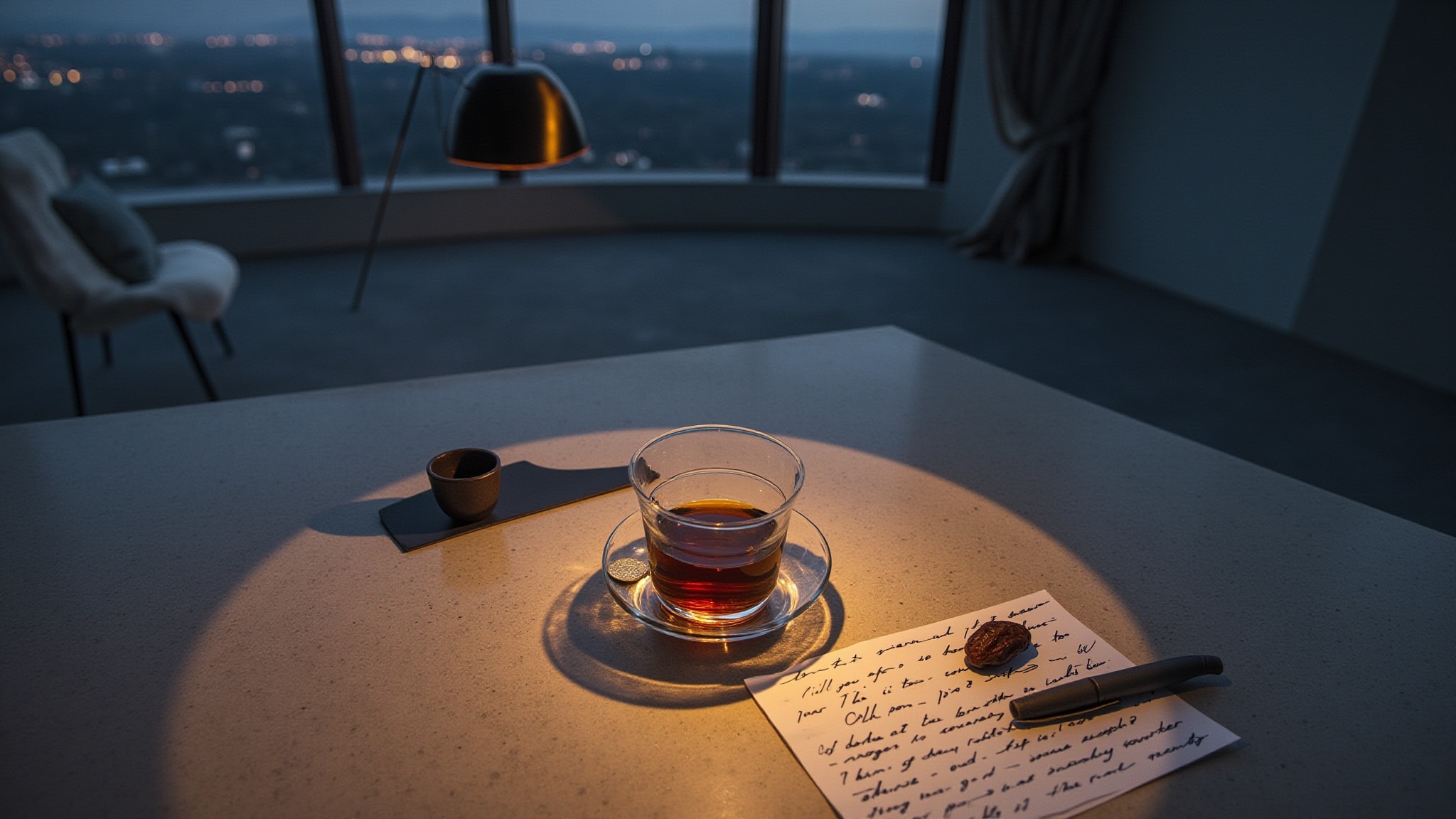
Ashara takes its name from Ashara Komayd, protagonist of Robert Jackson Bennett's The City of Stairs. She's a woman described as a genius, planner, theological expert, cultural ambassador, detective, and spy, someone with the courage to stand up for oppressed people from within the system of oppression itself, reading between the lines because the lines are never telling the truth. Perfumer R Bagley translated that character into scent in 2020. The composition centers on black tea and ink, two notes that speak to Ashara's quiet intensity and her gift for noticing what isn't being said. There was no scenic inspiration here, no postcard landscape. The perfumer reached for something harder to name: a quality of mind, the patience of someone who watches and waits and understands.
The Nilgiri black tea here steams upward through every phase of wear, opening bright and brisk before settling into something rounder and more tannic. It's paired with white oud, an accord built from naturals and synthetics designed to suggest oud without the barnyard funk. The effect is creamy and almost papery, a quiet base that lets the tea speak without competing with it. Dates add a honeyed, almost caramel depth without tipping the whole thing into pastry territory; they read more like dried fruit than dessert. And the ink. That's the gamble.
The evolution
The first ten minutes are the coldest the fragrance will ever be. Tea and metal sit close to the skin, with something faintly sharp underneath that reads more like static than scent. Around the twenty-minute mark, dates soften the edges and the metallic prickling fades into something warmer. The white oud arrives quietly in the background, never loud, never barnyard. By hour two, the ink is barely there. What remains is tea sweetened with date, and that clean, almost soilless wood underneath. On fabric, the oud holds longer. On skin, the drydown at hour four is mostly warm tea with a faint ghost of something mineral. It doesn't project much past arm's length, which means Ashara is a scent for the wearer, not the room.
Cultural impact
Ashara is a quiet favorite among indie fragrance enthusiasts who gravitate toward unconventional compositions. It wears as a bookish scent, warm without being gourmand, unusual without being challenging. On skin, the tea reads clean and slightly bitter at first, then softens as the white oud emerges with its creamy, almost suede-like texture. The ink accord never turns sharp or aggressive; it lingers at the edges, a faint graphite hum that gives the whole composition an off-paper feel. It's the kind of scent that invites conversation rather than demanding it, and it rewards close attention.