
The Story
Why it exists.
The beginning
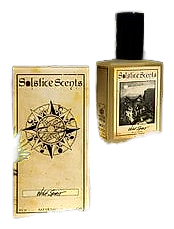
Wolf Spirit arrived in 2015 from Angela St. John, the perfumer behind the composition. The fragrance draws on a single, clear impression: the wolf itself stays invisible. You get what it left behind, a crushed needle on the ground, musked fur caught on a branch, the resinous warmth of a sleeping hollow. There's no sweetness here, no gourmand softness, nothing to soften the edges. It's sharper and older than most woods, built to hold its shape in cold air and on skin that runs warm. The composition keeps its distance from the softer atmospherics the house is known for, trading warmth for weight and comfort for presence.
What separates Wolf Spirit from the usual woody-aromatic fare is the inclusion of fur as a named note, an ingredient that anchors the composition in something raw and unrefined. Combined with desert sage, pinyon pine resin, and a layered incense base, the fragrance reads less like a forest walk and more like a forest at night, with company. The coniferous backbone is deliberate: pine, spruce, pinyon, and juniper stack on top of each other rather than blending, so the opening keeps shifting between them instead of collapsing into a single evergreen accord. Each conifer brings its own texture.
The evolution
The first hour is resin and conifer, almost aggressively green, with palo santo and juniper leading and a steady undercurrent of copal and frankincense. The fur note starts soft, more suggestion than presence, but it gathers weight fast. By hour two, the sharp green edges have dulled. Cedar and vetiver take over the middle, turning the composition drier and more grounded. The incense warms up, the desert sage shows its dusty, slightly bitter face, and the fur becomes the loudest thing in the blend, closer to skin, harder to ignore. From hour four onward, the top notes are gone and the conifers are a memory. What's left is a dense, smoky resin-fur base that sits close to the skin like a second pelt. It doesn't project much after the halfway mark, but what remains is unmistakable, warm, animalic, and persistent. The drydown smells like cold embers and something that was once alive.
Cultural impact
Wolf Spirit occupies a specific corner of the indie fragrance world. It wears with purpose, the kind of scent that changes the way a room reads the moment someone walks in wearing it. The fur note is the dividing line, present enough to notice, restrained enough to wear in public, and divisive enough that people either fall hard or move on. It doesn't try to be versatile. It knows exactly what it is. For those who connect with it, Wolf Spirit becomes a signature rather than a rotation piece, something pulled out when the occasion calls for presence over polish.