The Story
Why it exists.
The beginning
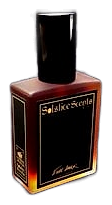
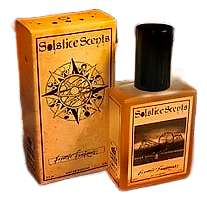
Gehenna arrives from Solstice Scents in 2016, the work of Angela St. John, whose independent perfume house has earned a reputation for committed, small-batch work. There is no daylight here. No citrus to soften the blow, no green stem pretending it's fresh. The intent is weight. The intent is shadow. The fragrance wears its darkness without flinching, built for the wearer who wants a scent with presence, something that sits on skin like an atmosphere rather than an accessory. From the first application the composition commits fully, a dense pour of resin and smoke that announces itself before you've taken two steps. It's not a scent that asks for permission.
What separates Gehenna from the incense-and-musk crowd is the structural honesty. Red musk sits at the center, animalic and dense, and it's not dressed up to be pretty. Dragon's blood resin adds the blood-red warmth, the almost-wet heat that makes the opening feel alive. Somali myrrh brings its ancient, medicinal bitterness. Birch tar drags everything downward, smoky and leathery, the way a fireplace stains a room. Egyptian musk arrives later as the quietening force, the white light the brand describes. Nothing is synthetic-pretty. Nothing is dressed for an occasion.
The evolution
The first ten minutes are a wall of red musk and dragon's blood, dense and almost overwhelming, the kind of opening that makes you reconsider. Birch tar and wood smoke push it darker, ash-soft, the scent of something burning slowly in a closed room. By the thirty-minute mark the myrrh starts pulling through, a resinous bitterness that cools the heat without softening it. After an hour, the Egyptian musk arrives like a held breath releasing, lighter and slightly powdery, rounding the sharper edges. The wood smoke and dragon's blood continue to anchor the composition throughout, their warmth persisting in the base while the more volatile top notes gradually recede. The myrrh acts as a bridge between the opening's intensity and the later stages, its bitter-cooling character threading through the heart and into the drydown.
Cultural impact
Released in 2016, Gehenna has earned its place among the more committed dark, resin-forward offerings in the indie space. It wears like a ritual object rather than a fashion accessory, and that weight is precisely the point. The fragrance doesn't try to be versatile, doesn't try to smooth its edges for broader appeal. It commits to a single feeling, and that commitment is what keeps it in rotation for collectors who treat fragrance as atmosphere rather than accessory. The composition's refusal to compromise has made it something of a reference point, a benchmark against which other dark indie releases are measured.