The Story
Why it exists.
The beginning
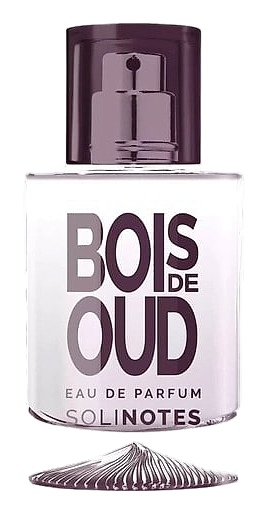
Bois de Oud arrived in 2023 as part of a dual release marking Solinotes' first steps into darker, more opulent territory. The house had spent over a decade building a catalogue around single-note clarity, patchouli, vanilla, iris, ambre, each one a clean idea, a precise signal. By 2023, expansion made sense. Not toward more complexity, but toward depth that the earlier releases hadn't attempted. Benoît Bergia built the composition around two opening notes that don't apologize for themselves: incense and black pepper. Together they announce the fragrance before the heart has a chance to settle. The oud arrives next, paired with iris to keep it from reading as raw or overwhelming. Bergia understood the trap of oud, if treated carelessly, it either dominates everything or disappears entirely. His solution was to build around it, to let myrrh and amber carry structural weight so the precious heart note could read clearly without shouting.
The choice to pair oud with iris is the most interesting decision in the pyramid. Iris tends toward softness, powder, a certain reticence. Oud tends toward depth, resin, almost clinical intensity. Together they create a heart that is neither soft nor aggressive, it sits in a middle register that reads as elegant rather than bold. The base amplifies this effect. Myrrh brings balsamic sweetness; amber adds warmth; musk rounds the edges into something close to skin. What could have been a smoky overdose becomes instead a warm, intimate trail that stays near the wearer rather than announcing them to the room.
The evolution
The first twenty minutes are the most arresting. Incense and black pepper arrive simultaneously, creating a smoky-black contrast that isn't gradual, it's immediate, almost confrontational. Some wearers reach for their wrist at this phase; others need a moment to adjust. Neither reaction is wrong. By the thirty-minute mark, the incense settles. The pepper fades. The iris begins to appear, dusting the oud in something cooler, almost violet-soft. The transition feels like a room dimming, still present, but gentler. The base arrives around the two-hour mark. Myrrh and amber form the structure; musk threads through everything, keeping the drydown intimate and close. This is the longest phase. On most skin types, the final four hours read as warm powder, iris remnants over amber, with myrrh holding everything together. On fabric, it lasts until the next morning.
Cultural impact
Bois de Oud doesn't try to compete with oud-heavy releases from houses charging several times the price. Instead, it takes a different position, accessible depth. The smoke-and-spice opening has more in common with niche compositions than with the warm ambers and sweet florals that dominate its house's catalogue. Wearers who gravitate to it tend to appreciate architecture over accident: the way the fragrance moves from phase to phase, the restraint in the heart, the intimacy of the drydown. It's a composition that rewards attention.