The Story
Why it exists.
The beginning
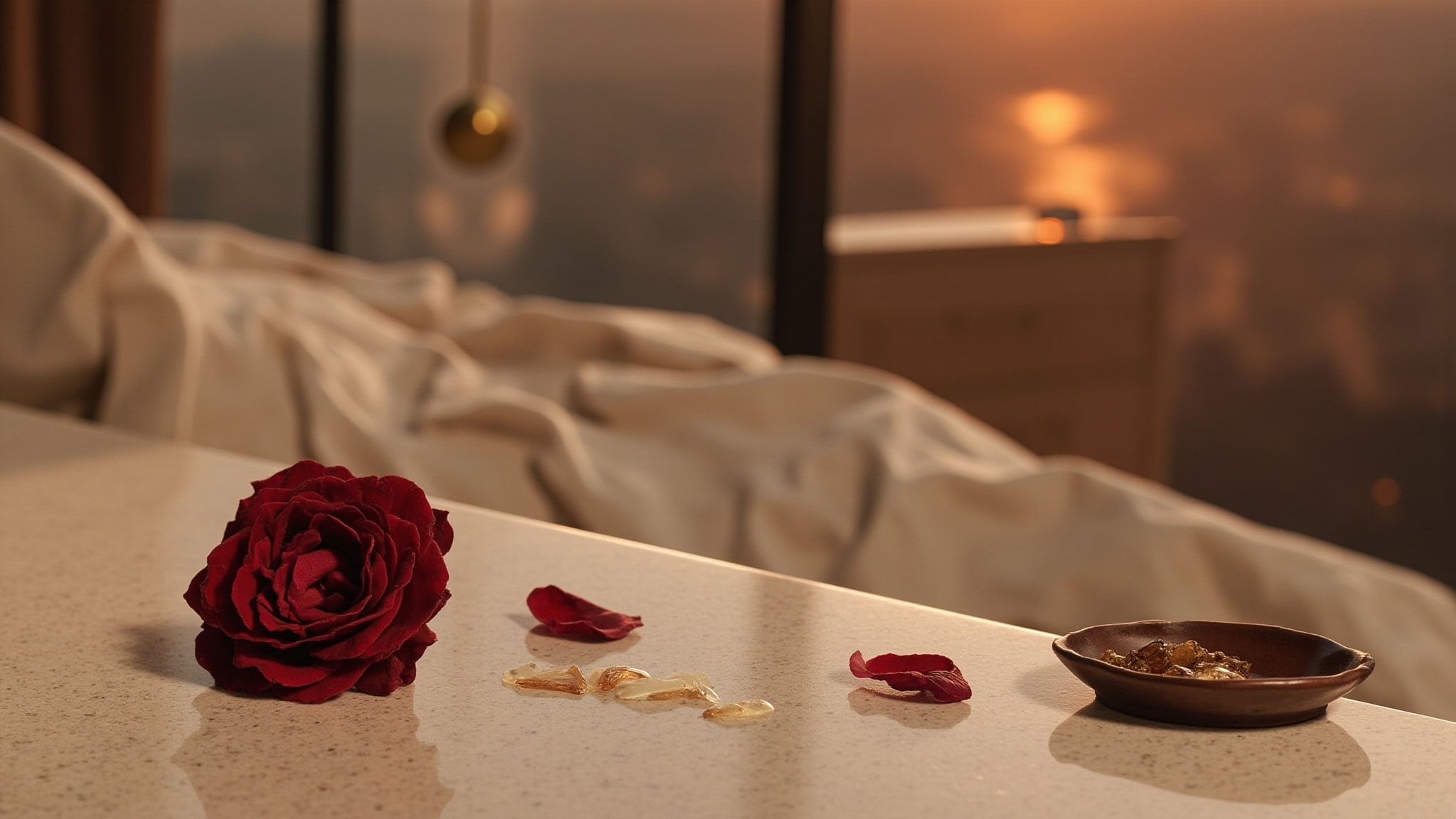
Aphrodite takes its name from the Greek goddess of love and beauty, but the inspiration lands closer to earth than mythology. Ajne built this composition around a simple premise: what happens when you take a rose seriously, treat it as the central character rather than a supporting note, and let resin and vanilla do the architecture. The house draws on natural aromatic materials, essential oils, absolutes, and plant-derived extracts sourced from flowers, leaves, woods, roots, and resins. That commitment shapes every bottle that leaves the workshop. Rose oil in its natural form carries a warmth, a faintly honeyed weight, a complexity that takes longer to unfold but rewards patience.
What makes Aphrodite worth paying attention to is the ratio. This one inverts the structure found in many rose fragrances: rose is the foundation, and the sweetness is the architecture. Myrrh, a resin with ancient ritual associations, bridges the floral and the gourmand. It pulls the vanilla downward, gives it gravity, keeps the composition from veering into syrup. The vanilla itself is neither sugary nor foodlike. In its natural form, it carries woody, almost smoky undertones that read more like bark than frosting.
The evolution
Rose leads the way in the early minutes of the wear. Bulgarian, Moroccan, and Turkish together produce a density that fills the air close to the skin, a sweet-floral haze that's neither powdery nor soapy, more the smell of crushed petals left in a warm room. Then the myrrh surfaces. Not sharp, not medicinal, but a dry, resinous warmth that anchors the rose and stops it from floating away. The vanilla arrives gradually over time, and it's worth noting which vanilla this is: Bourbon vanilla, carrying those woody, slightly smoky, almost fermented undertones that give it depth. The drydown, the place where this fragrance lives for most of its life, is where the composition finds its final shape. The rose fades into memory rather than disappearing. The myrrh and vanilla settle together into something that reads less like perfume and more like the scent of old wood and warm skin.
Cultural impact
Aphrodite sits in a specific corner of the fragrance world: the one where natural perfumery and rose-forward compositions overlap. It's not a bold statement fragrance, and it doesn't try to be. Wearer reports tend to describe someone who chooses scent as ritual rather than performance. The sweetness and resin make it read warmer and more intimate than a typical soliflore. Those who gravitate toward it often own other Ajne compositions, or they come from a background in essential oils and appreciate the way natural rose oil wears on skin.