
The Story
Why it exists.
The beginning
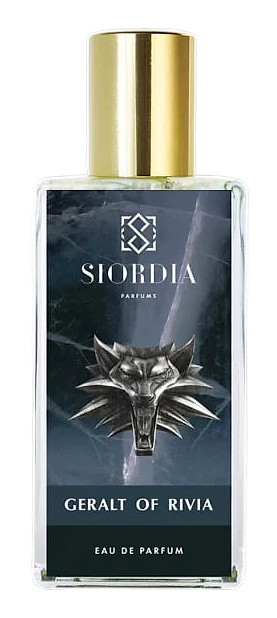
Geralt Of Rivia arrived in 2020, a character study in glass from Ekaterina Siordia's house. The name borrows from Andrzej Sapkowski's Witcher saga, drawing on the brooding, road-worn figure of a monster hunter who survives on instinct, training, and a refusal to bend. The fragrance borrows its palette from materials that carry their own sense of travel: horsehair that grounds the composition in something earthy and lived-in, cade juniper for its dark smoky character, and fir absolute pulling toward a cool, green dryness. Together these notes sketch a man who smells less of any single moment and more of accumulated distance, the kind of scent that belongs to someone who has slept under more open sky than solid roof, who carries the trail with him long after the road has been left behind.
What makes the composition unusual is the inclusion of horsehair, a material rarely seen outside equestrian leather accords. It's not listed as an abstract leather fantasy but as a literal animalic note that carries its own warmth and texture, something that reads as organic and slightly untamed against the more architectural materials around it.
The evolution
The opening hits with bergamot and cade oil before the fir absolute arrives, pulling the temperature down and filling the air with a resinous, green woodsmoke character. The Somali frankincense warms through the early wear, and the rum note begins to rise, bringing its own particular density to the blend. The horsehair starts to surface as the composition develops, and this is where it shifts character. It stops being atmospheric and starts being tactile, a dense, warm presence that changes how the surrounding materials read against skin. As the hours pass, the smoke settles into oak, amber, and a clean vetiver that gives the drydown structure without tipping into sweetness.
Cultural impact
Geralt Of Rivia uses fantasy fiction as creative scaffolding, building a fragrance around a literary character rather than around a market trend or a conventional masculine archetype. The result reads as a character study in olfactory form, less concerned with projecting an image of success or seduction than with evoking a specific kind of figure: weathered, solitary, accustomed to long stretches of travel. It belongs to a wider current of niche work that treats fragrance as narrative rather than accessory, asking the wearer to inhabit a story rather than simply smell pleasant.