
The Story
Why it exists.
The beginning
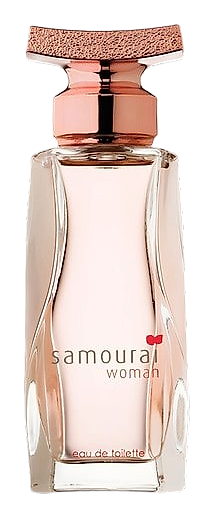
Thomas Fontaine created Samouraï Woman Love Gold in 2006 as part of the brand's Love series, an expansion into warmer, more emotive territory. The name carries dual meaning: love as the emotional core, gold as the sensory temperature. This wasn't designed to cool or recede. It was designed to arrive. Fontaine built it around mango and coconut, two materials that don't typically share space in mainstream feminine perfumery, and anchored them with cedar to keep the sweetness from floating away entirely. The cyclamen adds a quiet floral counter-melody, not a afterthought, but a restraint. A lesson in what happens when tropical abundance learns to hold itself back just slightly.
What makes this composition unusual is the interplay between gourmand and woody. Mango and coconut pull toward dessert territory, the kind of sweetness that could tip into cloying if left unchecked. Cedar does the quiet work of grounding that sweetness, pulling it down from pure fantasy into something wearable, present, alive on skin. Plum appears in the base as a textural bridge, neither fully fruity nor fully resinous, it exists to remind you that this fragrance has depth. Cyclamen, often overlooked, acts as the cool underbelly of the heart: green, slightly bitter, the note that prevents the mango from becoming syrup. These aren't accidental neighbors.
The evolution
Mandarin opens bright and clean, the scent of a fruit being peeled, zest flying. Twenty minutes in, the mango arrives. Not the artificial mango of cheaper fragrances but something rounder, almost overripe, the kind that stains your fingers. The cyclamen softens it slightly, adds a dusty floral note that feels like petals pressed in a book. By the second hour, the coconut emerges, creamy, warm, never heady. This is where the fragrance transforms. The opening was bright fruit; the heart is something closer to a memory of summer. The drydown belongs to cedar and musk. Plum adds a quiet sweetness, but the dominant sensation is skin-warm wood and clean skin. On fabric, it lingers for hours. On skin, plan for four to six, with the woody base lasting longest. The next morning, there's a faint trace, coconut and cedar, close and intimate.
Cultural impact
Samouraï Woman Love Gold arrived in 2006 during a peak era for fruity-tropical fragrances in Europe. The Samouraï brand, known for its Japanese-inspired naming and packaging, built a devoted following through accessible luxury positioning. Love Gold specifically captured the early-2000s appetite for mango and coconut notes before the niche boom shifted attention toward oud and leather. This fragrance represents a transitional moment when mass-market brands still dominated fragrance culture, before social media fragmented tastes into countless micro-communities.