
The Story
Why it exists.
The beginning
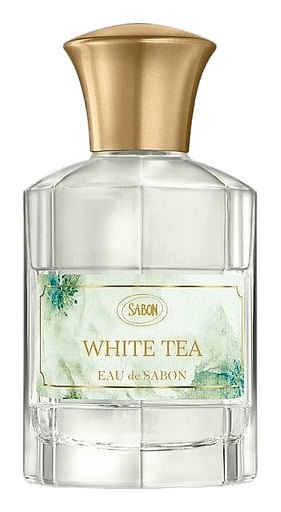
White Tea arrived in 2019 as part of Sabon's expansion into expressive fragrance, but it carries the brand's founding DNA in every breath. Sabon built its name on natural solid soaps, formulas designed to transform an ordinary shower into something deliberate. White Tea translates that philosophy into scent: the idea that a single, clear note can turn a moment routine into a moment ritual. The name says everything. Not a complex bouquet, not an elaborate construction. Just white tea, and what happens when you pay attention to it.
What makes White Tea unusual is its restraint. The pyramid has all the familiar players, citrus, florals, spices, woods, but they never crowd each other. Fig and jasmine open fresh, never sweet. Lemon provides clarity without sharpness. The cardamom and nutmeg heart adds warmth without weight, a quiet spice that could so easily tip into potpourri but doesn't. The violet and thyme base grounds everything, keeping the florals from floating away and the citrus from dissipating. It's composed, not complicated. That balance is harder to achieve than complexity, and it rewards wearing, not just smelling.
The evolution
The opening hits bright: lemon first, then fig's green sweetness underneath. Jasmine arrives within minutes, softening the citrus into something rounder. This phase lasts roughly 90 minutes before the tea note, real white tea, mineral and slightly bitter, emerges in the heart alongside cardamom. The warmth builds gradually. No jarring transition. Around the 3-hour mark, cedarwood and violet take over. The thyme appears as a quiet herbal thread, not an accent. By hour 5, you're left with a skin-close warmth: cedar, violet, and the ghost of tea. On fabric, the cedar and violet linger into the next day. Moderate sillage throughout, present for the wearer, respectful of shared space.
Cultural impact
The minimalist fragrance movement owes much to cultural shifts toward simplicity and intentionality in self-care rituals. White Tea emerged during a period when consumers began rejecting olfactory excess in favor of quieter, more personal scents that felt like an extension of clean skin rather than a statement. This shift reflected broader cultural movements toward mindfulness and the rejection of performative luxury. White Tea by Sabon captured this zeitgeist by positioning itself as anti-flagrance, a scent that whispers rather than announces. Its cultural resonance lies in its democratization of luxury, making the concept of sophisticated simplicity accessible beyond niche perfume counters.