The Story
Why it exists.
The beginning
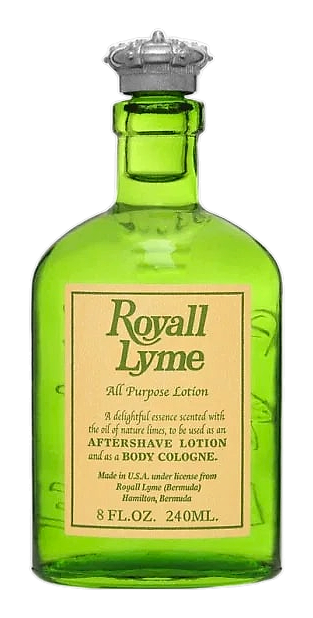
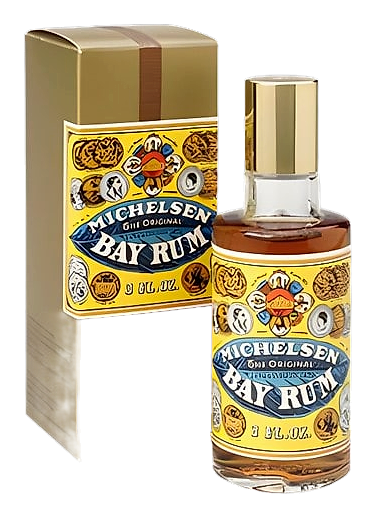
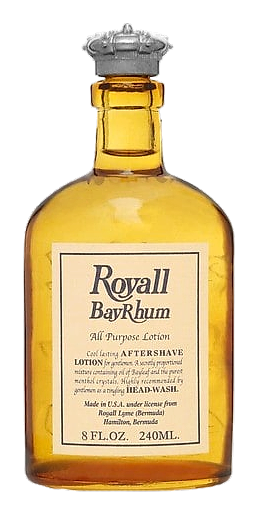
Royall Bay Rhum arrived in 1962 as a practical answer to an island problem: how to smell good when the heat makes everything else feel like too much. The house had spent years perfecting Royall Lyme of Bermuda, lime and florals for the salt-tinged Atlantic air. But Anthony J. Gaade, the Bermudian yachtsman who founded the brand in 1957, understood that his island demanded something different for the body's harder moments. Bay Rhum became that alternative: mentholated, spicy, and herbal, built for the skin's relief rather than the nose's admiration. It wasn't perfume in the European sense. It was something older, pulled from the barber shops and grooming traditions of the Caribbean, where bay rum had long been the measure of a well-kept man.
The oil of Murcia Acris, bay leaf from the Dominican Republic, sits at the center of the composition. This isn't decorative lavender or aspirational citrus. It's functional: the kind of ingredient islanders trusted to cool the skin, fight bacteria, and make the tropical heat bearable. The menthol amplifies that cooling effect, a calculated choice rooted in climate rather than fashion. What makes Royall Bay Rhum unusual isn't its ingredients, they're traditional, even conservative, but the fact that it survives as an authentic formulation. Most bay rums from the mid-century era are discontinued, their places taken by sweeter, safer interpretations. This one kept the bite.
The evolution
The opening hits fast: menthol first, that cold-bite sensation that precedes everything else. Then bay leaf asserts itself, sharp, herbal, camphorated, backed by green grass that keeps it grounded rather than medicinal. The spices don't arrive all at once. They build. Ten minutes in, the composition shifts from cooling to warming. Bay leaf deepens. Green grass fades. The menthol recedes but doesn't disappear, it's the undercurrent now, the thing that makes the warm spices feel intentional rather than accidental. By the second hour, this is a different fragrance. The camphor note, barely perceptible at first, rises to meet the lingering bay. The drydown is green and slightly bitter, like crushed leaves on warm skin. It stays close. Moderate sillage means this is fragrance you'll smell on yourself more than others will smell on you. By hour four or five, it's skin-warmth and a memory of herbs. Nothing synthetic has crept in. That's the tell: natural materials age differently. The drydown is earned.
Cultural impact
Royall Bay Rhum belongs to a category that has largely disappeared: the authentic Bay Rhum, a Caribbean grooming tradition that predates modern perfumery's notions of masculine elegance. Before the heavy chypres and animalic powerhouse scents of the 1970s, Bay Rhum was what men reached for. Not perfume, aftershave, body splash, something with function baked into its identity. The review archive suggests Royall Bay Rhum still surfaces in conversation as a reference point: the scent an older man remembers from his father's bathroom, or from a barber shop that hasn't changed its products since the 1960s. That kind of loyalty doesn't come from marketing. It comes from a formulation that did exactly what it promised, decade after decade. Newer fragrances chase trends.