
The Story
Why it exists.
The beginning
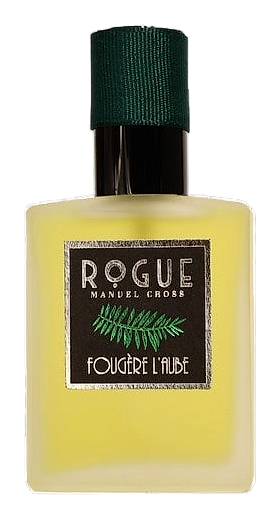
Manuel Cross built the initial structure of Fougere L'Aube as a classic 1930s fragrance, cozy, familiar, nostalgic. He describes it as reminiscent of the men's colognes and aftershaves he smelled as a child. Then he took that vintage base and accented it with modern aroma chemicals. The result: a super-fresh, late-1980s style fougère that projects with conviction. The name says it all. L'Aube means "dawn" in French, the moment when night fades and morning hasn't decided what it wants to be yet. That's where this fragrance lives. Not yesterday. Not tomorrow. Right at the edge.
The galbanum does the heavy lifting in the opening. Its bitter-green bite isn't a supporting note, it's structural. It forces the lavender and citrus to work harder, to stay sharp instead of soft. Costus adds an animalic warmth that most modern fougères have trained out of themselves. The Moroccan rose absolute and Indian sandalwood don't announce themselves as distinct elements. Instead, they meld into the fougère effect, threading warmth through green without ever becoming a rose fragrance or a sandalwood fragrance. What makes this unusual is the arc: the opening reads sharp and cold, almost medicinal. The drydown settles warm and close. That shift, from biting to intimate, is where the personality lives.
The evolution
The opening hits with camphor's icy medicinal bite cutting through bright citrus, bergamot and petitgrain, and a sharp green note that doesn't apologize for itself. Hay and lavender absolute arrive quickly, reinforcing the classic fougère structure with a dusty, aromatic warmth that feels familiar even if you've never smelled it before. Within an hour, the green deepens. Galbanum takes the lead, pushing everything into that bitter, leafy territory where the scent feels like it was plucked, not composed. The heart settles into the fougère's core: oakmoss and costus creating a dense, slightly animalic green base that the Moroccan rose and sandalwood weave through without ever announcing themselves as separate elements. By the fourth hour, the camphor has faded. The real drydown begins: musk, amber, and costus, warm, intimate, projecting nothing. This is where the fragrance becomes personal. It stops announcing itself and starts belonging to the wearer.
Cultural impact
Fougere L'Aube occupies a specific position in the niche landscape, a fougère that doesn't compromise. The vintage 1930s base gives it an old-soul warmth, while the late-80s aroma chemicals give it fresh projection and modern presence. Critics, including Luca Turin, have noted Rogue as an unusual niche firm focused on well-built, unpretentious fragrances. Fougere L'Aube is one of the house's most discussed releases, praised for longevity, critiqued by some for the costus note, and consistently cited as a modern fougère that earns its classic references. For those seeking the fougère character without IFRA-induced reformulation, this is one of the few options that delivers.