
The Story
Why it exists.
The beginning
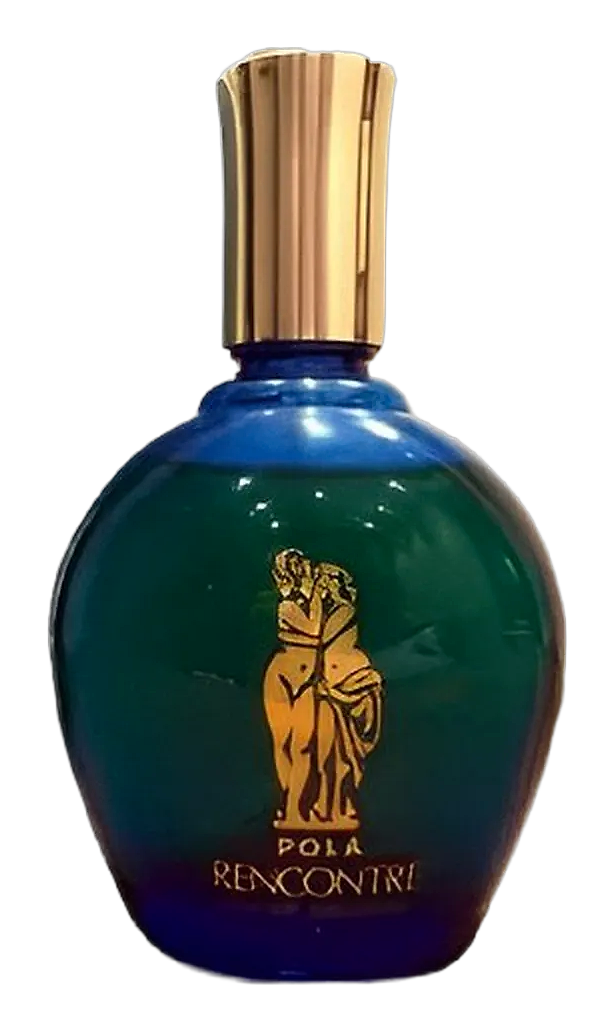
Pola, founded in 1929, built its reputation translating Japanese skincare precision into fragrance. Rencontre, launched in 1974, emerged during a period when Japanese houses engaged deeply with European perfumery traditions, particularly the aldehydic floral vocabulary that had been refined over decades by French houses. The name means encounter, suggesting the kind of meeting that leaves a mark.
Pola's approach treats fragrance as an intimate layer rather than a statement. Rencontre reflects this philosophy through its aldehydic opening, which is precise rather than overwhelming, and its floral heart, which complements rather than dominates. The woody, mossy drydown reinforces the idea of scent as a quiet companion rather than a declaration.
The evolution
Rencontre's arc moves from luminous to grounded. Aldehydes and citruses open the composition with sparkling clarity, the aldehydes providing structure while citrus adds immediacy. The heart introduces hyacinth and peony as the primary floral voices, with cyclamen and ylang-ylang enriching the middle register. The drydown brings oakmoss as a grounding element, complemented by cedarwood's dry warmth, tonka bean's sweetness, and musks that fade gently into skin space.
Cultural impact
Rencontre occupies a particular place in the collector's world: a discontinued Pola release from 1974, rare precisely because it was never produced at scale. Pola distributed through its own retail network, limiting reach but ensuring a certain curatorial quality. The fragrance reflects the house's broader ethos, scientific rigor applied to the art of subtle, evolving aromas. In a market crowded with statement scents, Rencontre offered (and still offers, for those who find it) something different: a floral aldehydic that asks to be encountered rather than announced.