
The Story
Why it exists.
The beginning
Venet arrived in 1965, the same year the house released Mademoiselle, two fragrances at once, a deliberate move into scent by a couturier who understood that a fragrance should extend the wardrobe, not replace it. Philippe Venet had trained under the masters: Elsa Schiaparelli first, then Hubert de Givenchy. His own house opened in 1962, built on coats and construction, on cloth quality and tailoring precision. The fragrance carried his name because there was nothing else to call it. Not a concept. Not a mood. Just the house itself, translated into liquid form. That restraint, refusing to dramatize, refusing to explain, is the whole point.
What makes Venet unusual isn't any single note but the combination: floral heart, woody base, and a green edge that could have gone wrong. The dill-cucumber impression in the top accord is rare for 1965, most compositions of that era played it safer, leaning into powdery aldehydes or heady jasmine. This one leans into something almost vegetable, almost herbal, almost astringent. The florals don't rescue it by overpowering. They arrive slowly, measured, and by the time warmth builds, the greenness has become part of the landscape rather than an intrusion. It's composition as tailoring: every element considered, nothing accidental.
The evolution
The opening is the declaration. Green, almost crisp, dill and something that reads cucumber on the right skin. It doesn't apologize for being unusual. For the first 20 minutes, it sits strange and certain, the way a coat that fits perfectly sits strange until you forget you put it on. Then the florals arrive. Not loud. Not sweet. Just present, steady, like the frame of a window you didn't notice until the light caught it. The drydown is where Venet earns its age. Wood settles into warmth, spice into skin, and what was crisp becomes close. On fabric, it lasts into the next day. On skin, 6-8 hours of quiet presence that never shouts.
Cultural impact
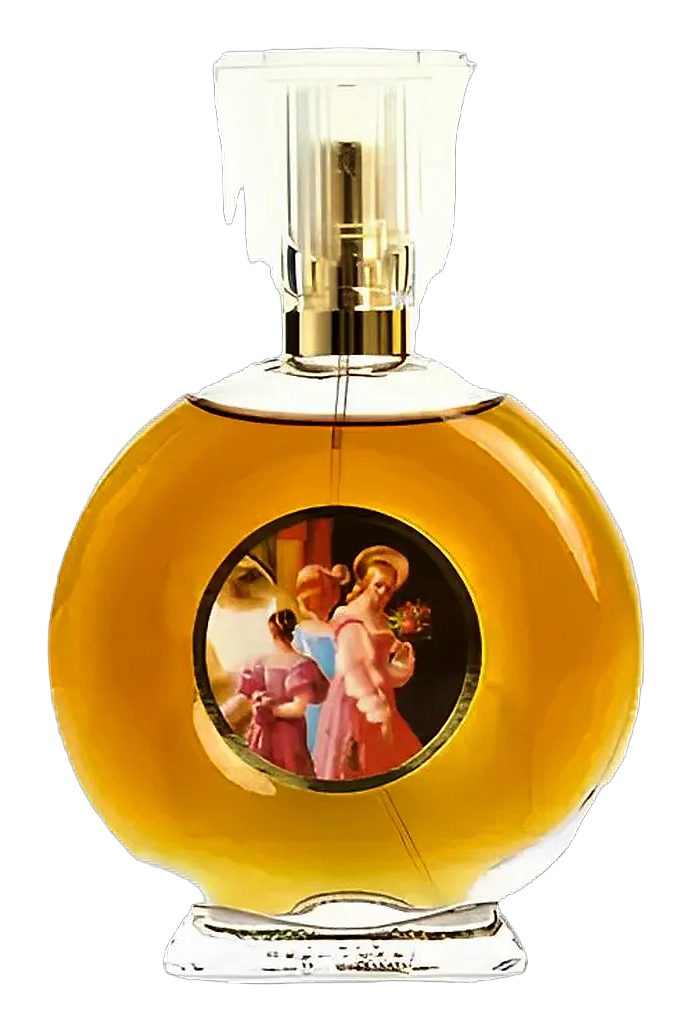
Venet occupies a quiet corner of fashion house perfumery, neither iconic nor obscure, but present. Reissued in 1996, it found a second audience among collectors seeking 1960s compositions that hadn't been reformulated into safety. Comparisons to Poison, Mahora, and Bal à Versailles suggest it sits in similar territory: vintage floral-oriental, composed, with an edge.