The Story
Why it exists.
The beginning
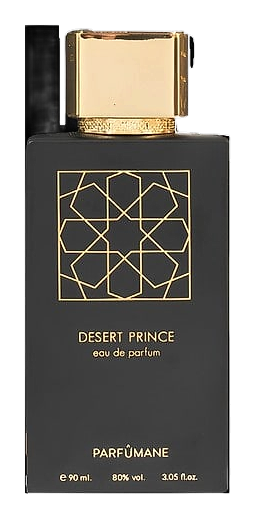
Desert Prince entered Parfumane's Oriental Collection in 2020, composed by perfumer Bekir Kantarcı. The collection trades in moods drawn from the cultural memory of the broader region, and this particular composition sits squarely within that framework, earthy, grounded, and built to feel timeless without leaning on the sweeter, more resinous register that tends to dominate the category. Patchouli sits at the center of that vision. Not as a decorative note, but as the structural spine the rest of the fragrance hangs from. Around it, the composition moves through layers of dry wood, smoldering resin, and a faintly bitter green undertone that keeps the patchouli from collapsing into the muddiness that plagues so many of its peers.
What makes the composition unusual is its commitment. Most fragrances that feature patchouli use it as a base accent, a dark foundation beneath brighter materials. Here, patchouli appears in all three layers of the pyramid, top, heart, and base, which means the note never disappears or transforms into something else. It just deepens. The herbal opening is patchouli's greener, sharper expression. The heart adds ambroxan for warmth and cedar for structure. The base returns to patchouli's earthiest form, now joined by moss and leather. This layering creates a composition that smells like a single, evolving material rather than a sequence of separate notes. The effect is monolithic, intentional, and rooted.
The evolution
The first spray hits with green intensity. Herbaceous and sharp, almost like crushed stems and dry soil after rain. This opening phase lasts roughly twenty to thirty minutes, and it announces itself without apology. Some wearers find it too assertive at first contact, a wall of green rather than a suggestion. If you stick with it, the cedar and ambroxan in the heart start to soften the edges. The herbal sharpness recedes and something warmer takes over, a leathery warmth that feels less like foliage and more like a well-worn jacket. This middle phase is where the fragrance finds its rhythm, and it holds there for two to three hours before the base fully arrives. The drydown is the best part. Moss and leather settle into the skin alongside patchouli's deepest expression, creating something that smells less like a fragrance and more like a place, an old library, a stone courtyard, the interior of a vehicle that's traveled far. On fabric, the leather note lingers noticeably longer than on skin, sometimes projecting into the next morning.
Cultural impact
Desert Prince sits within Parfumane's Oriental Collection, a series of compositions that draw on the aromatic vocabulary of the broader region. Wearers who gravitate toward patchouli-forward fragrances tend to respond to its austerity, its refusal to soften the note with excess sweetness or gourmand warmth. The composition commits fully to the earthy end of the spectrum, letting the patchouli speak in its rawest, most uncompromising register rather than smoothing it into something more accessible. That approach has earned it a niche but devoted following among enthusiasts who appreciate grounded, unapologetic compositions.