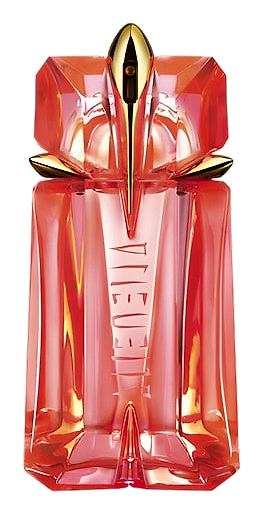

The Story
Why it exists.
The beginning
Stiletto began as a university project in 2007, when a group of students at Monmouth University created a fragrance as part of a coursework assignment. One of those students, Nicole Amy, saw something worth keeping. She bought the rights to the formula, improved it through her own refinement, and launched it in autumn 2010 under her own name. The fragrance was her vision now, not a classroom exercise. Working from outside the established fragrance industry, she developed the scent independently, shaping it until it was ready for release. The name carries an unmistakable sharpness, calling to mind the pointed silhouette of a stiletto heel. The composition was meant to match that image without leaning on the usual tricks.
Three notes carry the entire structure: musk, sandalwood, and vanilla. Musk provides the skin-like warmth that makes the fragrance feel personal rather than performed. Sandalwood gives it a creamy, woody spine. Vanilla softens everything without tipping into sweetness. The result is a composition that reads as powdery and warm rather than gourmand, more second skin than dessert. On skin, the three materials weave together in a way that feels closer to a single impression than a layered accord.
The evolution
The first hour is where the musk shows its work. It opens with a clean, almost soapy warmth, the kind that recalls freshly washed skin before anything else has settled. Sandalwood arrives quickly underneath, adding a milky creaminess that rounds the sharpness. By the second hour, vanilla takes the lead, but never aggressively. It's a baked vanilla, warm and slightly powdery, not the syrupy sweetness of a gourmand. The drydown is where this fragrance earns its reputation. What remains after three or four hours is a soft musk-vanilla blend that clings to skin and clothes. It doesn't project much past arm's length at that point, but on a scarf or a collar it lasts into the next morning. Simple construction, long memory.
Cultural impact
Stiletto finds its place among musk-vanilla-sandalwood compositions, a category that feels familiar to anyone who has spent time exploring softer, more intimate scent profiles. What distinguishes it within that territory is the absence of embellishment. Three notes, nothing extra, and a powdery warmth that comes from how those materials interact rather than from any added sweetness or spice. The fragrance has a distinct character because it doesn't try to compete with louder compositions. It doesn't reach for complexity or novelty.