The Story
Why it exists.
The beginning
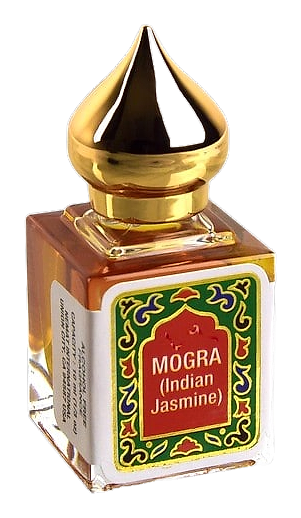
Mogra takes its name from the mogra flower, Indian jasmine sambac, used for centuries in garlands and hair ornaments across South Asia. The fragrance captures this tradition: jasmine worn close to the skin, jasmine as daily devotion. Nemat International launched the scent in 1991, grounding it in the same jasmine-forward philosophy that defines the house. Orange blossom, fresh jasmine petals, and creamy sandalwood form the backbone, simple materials, honestly rendered, without layering or distraction. The goal was not complexity. It was clarity. Jasmine has been central to Indian attar-making for generations. Ruh al Mogra, the essential oil of jasmine, carries weight in traditional perfumery: costly to produce, slow to unfold, unmistakably itself. Nemat's version brought that character into a more accessible format, keeping the flower front and center. What you smell is the jasmine first, the garland second, the brand nowhere at all.
The jasmine used here is not the diluted, de-indoled jasmine of mass-market florals. This is jasmine with something to say, bitter, fruity, with an animalic undertone that many fragrance houses typically remove. The compound indole, present in real jasmine flowers, gives this fragrance its signature edge: a slight sharpness that reads as warmth on warm skin, a sweetness that borders on sweaty, a green-floral quality that makes the scent feel alive rather than constructed. The composition uses three note categories, jasmine, woody notes, and spicy notes, working together without competing.
The evolution
The jasmine arrives fresh and immediate, not soft or reluctant. Bright, slightly green, with the faintest edge of indole, this is Indian jasmine, not a shadow of it. Within the first hour, the spicy warmth of the heart makes itself known, turning the brightness into something more textured. Cardamom or clove, depending on your skin, something warm and quiet. Woods settle beneath. Not cedar or sandalwood in the Western sense, something simpler, a warm foundation that supports without overwhelming. The jasmine doesn't disappear. It deepens, becomes part of the wood rather than something separate from it. Within a few hours, the drydown arrives. Jasmine still present but quieter, woven into a soft cream of sandalwood and musk. The sillage becomes intimate, almost skin-close, close enough to notice, impossible to place. On most skin types, this phase lasts another few hours before the jasmine finally fades. Mogra doesn't perform like a standard perfume. It performs like jasmine oil that learned to last.
Cultural impact
Within the jasmine fragrance landscape, Mogra occupies a specific position: unapologetically Indian, unapologetically itself. The scent preserves the indolic edge and green-floral complexity that jasmine carries in nature. It sits alongside niche jasmine oils and attars as an alternative to the refined jasmine often found in commercial perfumery. The formulation maintains the bitter, fruity character with an animalic undertone that many fragrance houses typically remove during processing.