The Story
Why it exists.
The beginning
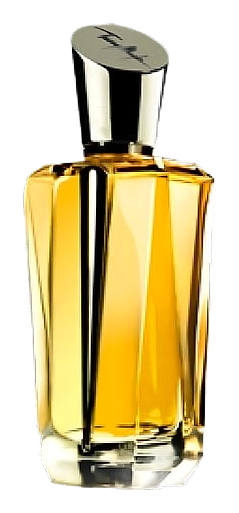
A Travers Le Miroir, 'through the looking glass', takes its name from Lewis Carroll's surrealist corridor, a space where logic inverts and the familiar becomes strange. Released in 2008 as part of Mugler's Mirror Mirror collection, it was created by perfumer Alexis Dadier to explore duality: the reflection that looks back but isn't quite you. The collection itself was built around this premise, each fragrance a different angle of the same glass. Dadier's brief was to make one that didn't simply smell beautiful but felt like a transformation, something worn when identity needs renegotiating.
What makes A Travers Le Miroir unusual is its counterpoint. Tuberose is rarely confrontational, it's creamy, tropical, heady. But Dadier introduced absinthe as an opening material, a bitter green liquor that reads medicinal, almost astringent, on first spray. The honey doesn't soften this edge. It amplifies the richness underneath while the absinthe keeps the surface cool. The result is a fragrance that has an argument with itself, and wins.
The evolution
First contact is absinthe. Cold, herbal, biting, a green note that doesn't ask permission. The freshness lasts longer than expected, maybe fifteen minutes, before the honeyed warmth underneath begins to push through. The transition isn't gradual. It's a shift in pressure. The tuberose arrives creamy and narcotic, and the absinthe doesn't disappear, it becomes part of the tuberose, giving it a metallic-green crispness that makes the floral read almost resinous rather than sweet. By the third hour, the woody base anchors everything. The absinthe edge softens to a memory. The honey-tuberose stays warm and close to the skin for hours after that, intimate rather than announced.
Cultural impact
Mugler has always operated at the fringes of fragrance culture, and A Travers Le Miroir represents its most uncompromising artistic statement from the 2008 Mirror Mirror era. The fragrance never achieved commercial ubiquity, which paradoxically elevated its cult status within niche fragrance communities. Its confrontational absinthe-tuberose pairing challenged wearers to engage with perfume as a form of olfactory provocation rather than passive pleasure. As a discontinued piece, it now functions as a benchmark for boldness in fragrance design, frequently referenced when critics discuss Mugler's willingness to alienate mainstream sensibilities in pursuit of genuine artistic expression.