The Story
Why it exists.
The beginning
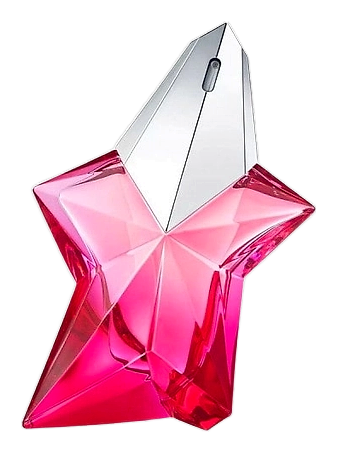
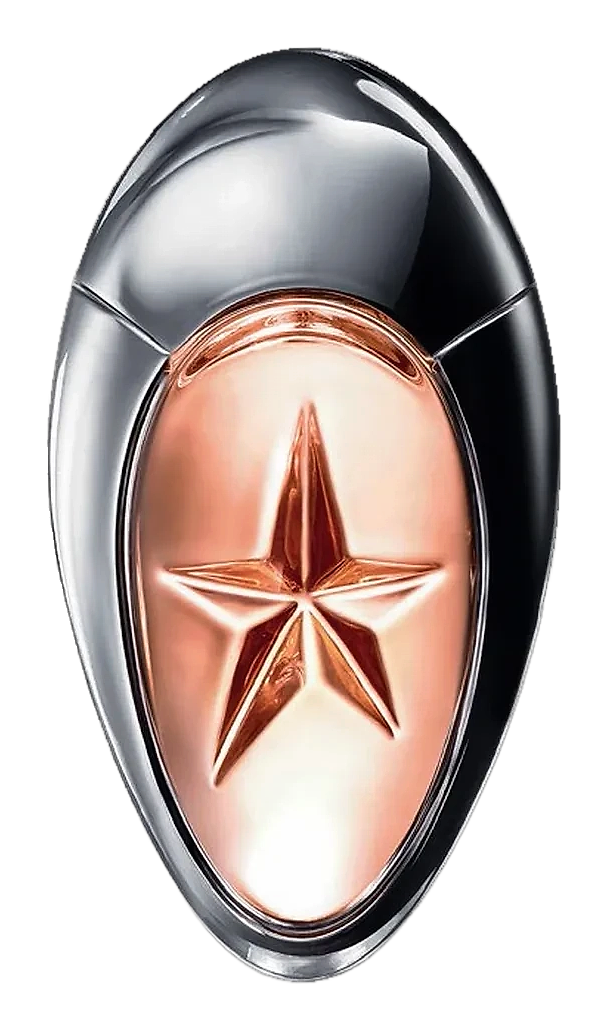
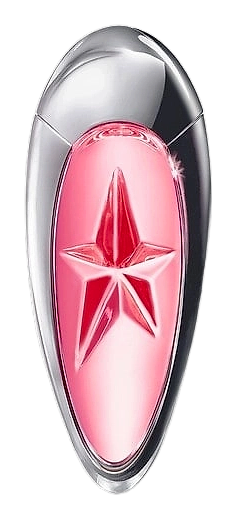
Louise Turner wanted to give the original Angel a daylight wardrobe. The 1992 version was built for nights that do not end, dark patchouli, caramel overload, a statement loud enough to silence a room. By 2019, something had shifted. The star that made Angel iconic deserved a second chapter: one that honored its roots while speaking a language suited to Tuesday afternoons and Sunday brunches. Turner worked within the Mugler framework but recalibrated its volume entirely, creating a companion rather than a replacement.
The note selection reflects a philosophy of deliberate pairing. Mandarin orange and peony work together to create an opening that is both bright and soft, avoiding the sharpness that citrus can introduce on its own. Apple and praline complement each other as fruity and nutty, building the gourmand heart without redundancy. Woody notes and cedarwood anchor the base with restraint, allowing patchouli to whisper rather than shout. Each pairing creates contrast and balance, ensuring the fragrance never becomes one-dimensional. The result is a daytime interpretation that retains Angel's essential character while refusing to overpower the spaces where it is worn.
The evolution
The opening chord of mandarin orange and peony establishes a tone of cheerful openness that the original never attempted. There is no bergamot sharpness, no aldehydic punch. Instead, the wearer moves from citrus brightness into a heart of apple and praline that feels almost confectionery in its warmth. This is where the fragrance diverges most sharply from its predecessor: the gourmand element is present but gentle, worn rather than announced. As the drydown arrives, woody notes and cedarwood provide a clean, grounded finish, with patchouli appearing as a subtle undercurrent rather than a commanding presence. The arc moves from sunlight to softness to structure, each stage clearly named yet flowing naturally into the next.
Cultural impact
The 2019 Angel EDT arrived as a bridge. The original had decades of loyalists who'd grown with it, and a generation who'd found it too much. Louise Turner's version gave both groups permission. Wearers who loved the signature but wanted daylight hours could finally have Angel at brunch. Those who'd found the 1992 version intimidating could approach it without fear. The praline-and-patchouli tension that defined the original remains intact. What changed was the presentation.