The Story
Why it exists.
The beginning
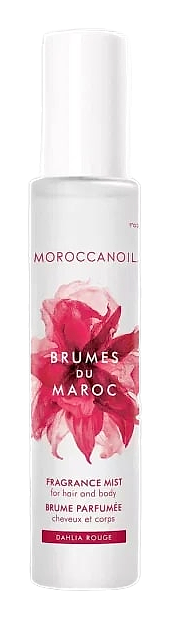
Dahlia Rouge is part of Moroccanoil's Brumes du Maroc collection, a 2026 expansion that translates the brand's identity into a standalone mist. The fragrance draws its name from the dahlia, a flower that reads as ornamental until you lean in and catch its depth. Pearl tuberose brings the cream, sandalwood brings the skin, and dahlia anchors it all with a green-edged floral glow. The composition stays lean: three notes, each one pulling its weight. Pearl tuberose has that dewy fullness, creamy without ever tipping into sweetness, the kind of white floral that feels lived-in rather than bridal. Sandalwood underneath doesn't announce itself. It cushions. It gives the florals something to rest on, a softness that keeps the whole thing from floating away.
Most florals aim for either freshness or warmth. Dahlia Rouge aims for the handoff between them. The dahlia note is doing the heavy lifting here, a less common choice that catches the nose off guard in the best way. Pearl tuberose smooths the dahlia's edges without flattening them, adding that creamy fullness that makes tuberose such a beloved white floral in any composition. The two florals trade textures: dahlia bringing the cool green snap, tuberose bringing the warm dewy depth. Sandalwood underneath provides the base, a steady woody hum that keeps everything from feeling top-heavy.
The evolution
The opening brings dahlia forward, cool and floral with that green-edged quality fresh-cut petals carry. Then the pearl tuberose rises, and the whole thing tilts warmer. That creamy phase carries through the early wear, the tuberose doing what tuberose does best: filling out the composition with a soft, almost waxy sweetness. As the hours pass, the dahlia steps back and the sandalwood takes over, and the florals blend into something that smells less like a bouquet and more like skin wrapped in petals. The sandalwood arrives gradually, not as a sudden base but as a slow deepening, turning the floral cream into something that reads more like warm fabric than flower. Eventually what's left is a soft, woody-floral skin scent, quiet and warm, the kind of trace that registers more as presence than as perfume.
Cultural impact
Dahlia Rouge sits in an interesting space. It's a fragrance mist rather than an eau de parfum, lighter in concentration and built for reapplication throughout the day. That format alone changes how it gets worn, less of a formal spritz-and-go moment and more of an ongoing gesture, something you reach for after the gym, before bed, mid-afternoon when you want a little lift. The dahlia-forward composition also gives it a distinctive character.