The Story
Why it exists.
The beginning
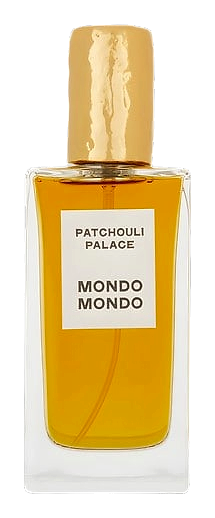
Patchouli Palace arrived in 2020 as part of Mondo Mondo's ongoing series of fragrance-as-archetype. The house treats scent the way it treats jewelry: as a wearable narrative, a moment you put on. Each composition begins with a brief that names a mood, a place, a feeling, then travels to a collaborating nose who translates vision into bottle. The fragrance itself is built around Indian patchouli, presenting in a dense, almost mineral register that arrives before any softening has a chance to occur. There's a quiet smoky edge to the opening, as though the leaves were cured near a hearth rather than sun-dried.
Indian patchouli anchors the entire composition, a material long associated with incense and ritual. The raw, earthy quality of the note is preserved rather than polished, letting amber and spice orbit the patchouli rather than compete with it. The result is dense and resinous, a scent that carries weight on the skin and refuses to dissipate into something thin or abstract. On first application the patchouli presents in its darkest register, almost loamy, before the amber begins to pull warmth through the composition.
The evolution
The opening arrives dense, almost mineral, the Indian patchouli presenting in its rawest register before any softening has a chance to occur. There's a quiet smoky edge here, as though the leaves were cured near a hearth rather than sun-dried. The amber begins to surface soon after, warming the composition from beneath like light filling a room at dusk. The spicy threads weave through the middle without ever declaring themselves as cinnamon, clove, or cardamom. They simply add friction. As the hours pass, the patchouli has deepened rather than faded, settling into the skin with a balsamic weight that feels less like a topnote and more like a permanent resident. Later on, the composition grows quieter but remains unmistakably present, and on fabric the next morning there's a ghost of dark, woody resin that lingers.
Cultural impact
Patchouli Palace appeals to wearers who want their scent to carry the residue of somewhere, someone, somewhen, rather than a clean abstraction. It reads as a devotional composition, one built around the slow accumulation of resin and warmth rather than the bright lift of a citrus or floral. The patchouli here is treated with the seriousness of a primary material, not as decoration or background, and the amber and spice orbit it without competing for attention.