
The Story
Why it exists.
The beginning
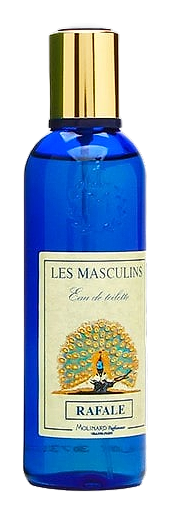
Rafale arrived in 1977 as a departure from Molinard's typical conservative offerings. The house had built its reputation on refined, measured compositions, reliable expressions of Grasse heritage that appealed to established taste. Rafale chose a different path. An aromatic fougère with unisex positioning at a time when the genre was largely masculine territory, it pushed against the house's quieter identity with a composition that layered thirteen notes into something unexpectedly bold. The name, rafale, French for a sudden gust of wind, captured the intent: a brisk, disruptive arrival that shifted the air.
The note structure reveals a green floral chypre backbone beneath the fougère structure. Lavender anchors the heart alongside basil and artemisia, anise-sweet and herbaceous, while jasmine and lily of the valley introduce white florals that could soften the composition into something conventionally feminine. Instead, juniper berries and green aromatics keep the herbs sharp. The thirteen-note pyramid reflects a 1970s confidence in density. More notes meant more complexity, and more complexity meant ambition. The drydown, sandalwood, cedar, patchouli, sustains that complexity for hours without ever really letting go.
The evolution
On skin, the opening arrives bright. Bergamot and lemon cut through immediately, crisp and citrus-forward, with mandarin orange adding a rounder sweetness underneath. Five minutes in, the herbs arrive. Lavender dominates, the fougère backbone asserting itself, while basil and artemisia add an anise-adjacent edge that keeps things from getting soft too fast. Juniper berries bring a green, slightly piney note that reinforces the herbal character. The heart phase introduces a brief floral moment: jasmine and lily of the valley appear, but the herbs don't yield. They just make room. Cedar strengthens as sandalwood and patchouli build underneath. The drydown is long. Cedar, sandalwood, patchouli, vetiver, they stay close to the skin for hours, projecting modestly but refusing to disappear entirely. What remains the next morning is a clean, warm woodiness that barely announces itself.
Cultural impact
Rafale arrived in 1977 as a departure from Molinard's typical approach, an aromatic fougère with genuine boldness and complexity. Its thirteen-note pyramid reflects the era's confidence in density over restraint. Today it appeals to those who value heritage houses and complex compositions over trend-driven design.