The Story
Why it exists.
The beginning
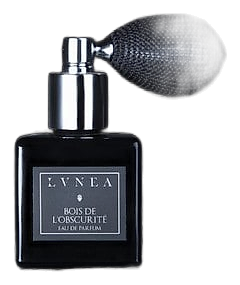
Bois de l'Obscurité translates to Wood of Darkness, and this fragrance earns that name completely. Engloner built it around the idea of shadow as something tangible, an olfactory presence rather than a vague impression. Guaiac wood and black amber form the early architecture, a warm resinous foundation that feels grounded and atmospheric. Then oud enters, and the composition shifts from contemplative to insistent, its deep complexity asserting itself with quiet authority. Palo Santo and patchouli deepen the hold, adding herbal and earthy dimensions that turn the woods into something darker and more grounded. The spices don't merely annotate; they prick at the edges, sharp accents that give the blend its edge.
What makes this composition unusual is the ratio of animalic to sweet. Most oud fragrances lean into the resinous, almost medicinal warmth of the wood. Here, black amber and ambrette seed push the fragrance toward musk, a furry, skin-adjacent quality that develops as the top notes recede. Guaiac wood provides the structural backbone of the composition. Patchouli keeps the earthiness honest. The spices, not named specifically, but present in the accords, function as a bridge between the bright opening and the long, close drydown.
The evolution
The opening hits with guaiac wood's dry, slightly smoky character and the unexpected sweetness of black amber, resinous, warm, like something slowly releasing its fragrance. Oud arrives early in the development, its darker, more complex qualities reshaping the overall impression. What changes is the texture. Getting heavier. The spices prick at the edges. Patchouli and Palo Santo form a dark, herbal base that starts to feel less like fragrance and more like atmosphere. As the scent settles into its drydown, musk and ambrette emerge, skin-warm, close, the smell of something that has become part of you rather than something you applied. This is where it lives for the remainder of its wear. Not projecting. Not announcing. Just there, the way a good dark wood should be.
Cultural impact
For those new to oud-heavy compositions, this serves as an approach that doesn't dilute what makes the material interesting. For experienced wearers, it's a reminder that natural oud doesn't have to mean loud or aggressive. The fragrance focuses on texture and evolution rather than immediate impact. It demonstrates what botanical perfumery can achieve when the emphasis is on how a scent develops and settles into its wearer.