The Story
Why it exists.
The beginning
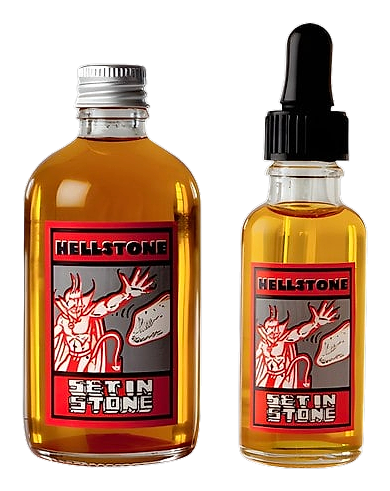
Hellstone takes its name from a monolith in rural England, a rock formation steeped in folklore, supposedly flung there by the Devil himself. The perfumer Simon Constantine built a fragrance around that image: the exposed earth left when something ancient moves. Fresh soil. Tangled roots. The mineral smell of ground disturbed. It's a landscape, not a mood.
What makes Hellstone unusual is the restraint within intensity. Cumin carries heat, but beeswax and ambrette seed pull it back from the edge. The result isn't a polite fragrance, it's one that earns its name. The jojoba base gives it a warm, skin-like quality that makes the earth accord feel less like a concept and more like something close to the skin. This is vetiver without apology.
The evolution
The opening hits fast, cumin's sharp spice announces itself before vetiver's earthiness catches up. About twenty minutes in, the beeswax emerges. It doesn't sweeten so much as soften, creating a warm waxy middle ground that tempers the initial heat. The drydown is where Hellstone earns its longevity. The earth accord lingers, but it's no longer sharp, it's close, warm, almost intimate. On fabric, it can hold for a full workday and still be detectable the next morning. On skin, it settles into something that reads less like perfume and more like a natural warmth you've always had.
Cultural impact
Hellstone arrived in 2013 as part of Lush's ongoing experiment with challenging fragrance conventions. Rather than producing another crowd-pleasing floral or fresh aquatic, Lush leaned into controversy by placing cumin at the center of the composition. This decision reflected the brand's broader philosophy of authenticity over appeal. The fragrance sparked ongoing discussion in fragrance communities about the boundary between natural and challenging, with reviewers polarized between finding it repulsive and finding it deeply compelling. The name draws from English folklore, specifically a rock formation associated with the Devil, reinforcing Lush's tendency toward provocative naming that refuses to play it safe.