The Story
Why it exists.
The beginning
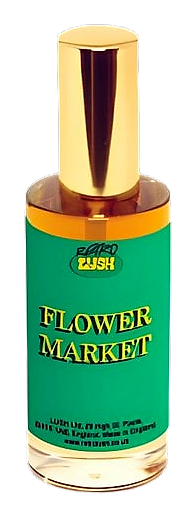
Flower Market arrived in 1999, dedicated to Audrey Hepburn in My Fair Lady. Mark Constantine created it as a tribute to that transformation, the flower girl who learned refinement without losing her edge. The name says it all: a market, not a bouquet. Bustling, verdant, alive. Not a single perfect rose in sight. Just the real thing, stems and all. The fragrance matches the energy: old-fashioned floral construction with spice that keeps you paying attention. This was Lush before the world knew what Lush would become, a founding perfumer working without a safety net, making exactly the scent he wanted to make.
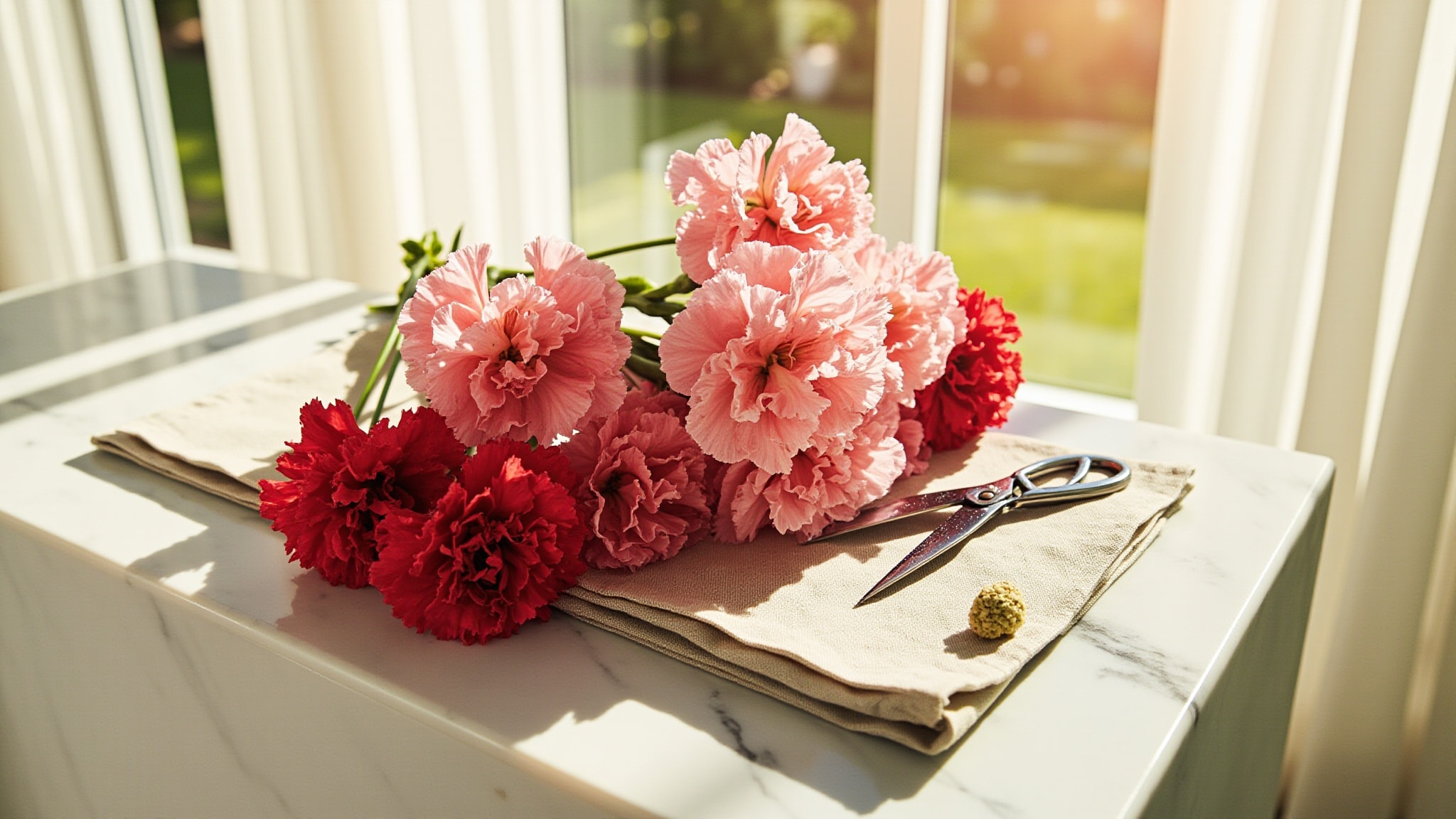
What makes Flower Market unusual is the carnation. In perfumery, it's often a supporting player, adding warmth, a hint of spice. Here it's the lead, backed by galbanum's sharp green character and ylang-ylang's creamy bloom. Violet adds powdery intimacy at the base. The result is a floral that refuses to be delicate. The green notes don't soften as they develop. They stay, cutting through the sweetness, reminding you that flowers grow in dirt, not void. It's an old-fashioned structure in that sense: distinct phases, clear architecture, nothing buried under a cloud of synthetics. What Lush brought to it was intention, the deliberate choice to make a floral that argues back.
The evolution
The carnation opens sharp and clove-like, immediately announcing itself. Galbanum arrives within minutes, green and slightly bitter, like crushed stems. The two don't compete, they circle. Ylang-ylang warms the middle phase, adding creaminess that softens the edges without losing the structure. Violet emerges as the heart settles, powdery and intimate. By hour two, the green has gentled into something quieter, but the carnation persists, warm, slightly spicy, refusing to fully retreat. The drydown is where Flower Market earns its reputation: powdery floral that lingers close to skin for hours, intimate but not invisible. On fabric, it lasts well into the next day, faint, warm, remembered.
Cultural impact
Flower Market earned a devoted following among those who encountered it before its discontinuation. Users consistently describe it as above-average in projection and longevity, qualities that made it memorable but also contributed to its polarizing nature. The carnation-forward structure sets it apart from conventional florals, positioning it closer to vintage compositions than contemporary releases. Its dedication to Audrey Hepburn and My Fair Lady reflects Lush's early approach: referencing specific cultural moments with specificity rather than generic luxury signaling. The fragrance occupies an interesting space: old enough to feel vintage, structured enough to feel timeless.
The House
LushLush is a British cosmetics company founded in Poole, England, in 1994 by trichologist Mark Constantine, his wife Mo Constantine, and five additional co-founders. The brand gained international recognition for its hand-pressed bath bombs, which Mo Constantine invented in her garden shed in 1989. Now operating in 49 countries, Lush has evolved from a single High Street shop into a global retailer while maintaining its commitment to ethical manufacturing and cruelty-free products. In-house perfumers Mark Constantine OBE, Emma Vincent, and Alina Gliwinska create the brand's fine fragrances, which are presented through the Perfume Library concept stores in Liverpool, Florence, and London. The fragrance collection spans over 230 perfumes dating back to 1989, organized into thematic volumes that serve as milestones in the brand's perfumery history.
The Creator
Mark ConstantineConstantine's style resists easy categorization because he never formally trained within the classical French system. Instead, he developed what industry observers call a raw materials approach, favoring strong concentrations of recognizable ingredients over sophisticated mole…