The Story
Why it exists.
The beginning
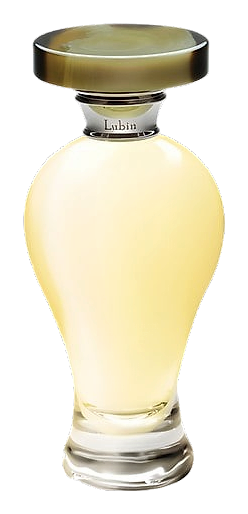
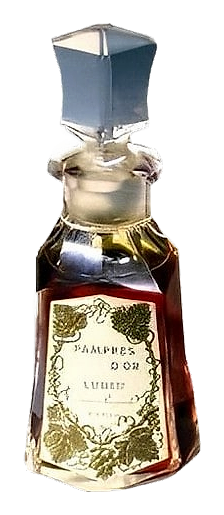
Pampres d'Or is a Lubin composition from 1906, arriving at a moment when the perfumery world was shifting into new territory. The late nineteenth and early twentieth centuries brought changes to what women wanted from a scent, and the great Parisian houses responded with compositions that spoke to a more modern sensibility. Pampres d'Or emerged from that conversation. Its name evokes something luminous and botanical, the kind of title that suggests warmth filtered through a canopy. As a floral composition, it belongs to a category that has long defined the language of fine French perfumery, a tradition built on the careful arrangement of petals rather than the brute force of a single loud note.
What makes Pampres d'Or worth pausing on is what it doesn't do. The early twentieth century saw perfumery expanding its palette, with new materials offering brighter effects and longer trails. Pampres d'Or stayed rooted in a classical structure, a floral composition that values the smooth, continuous line of traditional French perfumery. No fireworks. No novelty. The formula prefers a measured, elegant approach, the kind of composition that has nothing to prove. The ingredients are assembled with the unhurried confidence of a house that knows what it is doing.
The evolution
The opening is the lightest stretch, almost too quiet to register at first. A pale floral accord rises from the skin with a translucent quality, watery in its restraint, as though the fragrance is testing the air before committing to the conversation. Within the first few minutes, the composition begins to find its footing. What was scattered starts to gather, and the individual threads of the accord begin weaving into each other. By the half-hour mark the fragrance has settled into a single texture, rounded and continuous, the kind of unified surface that suggests careful blending rather than a stack of separate notes. This is the territory where Pampres d'Or lives: a smooth floral whole rather than a bouquet of competing voices. The middle hours deepen the composition without changing its character.
Cultural impact
Pampres d'Or sits in an unusual position, old enough to feel historical, and quiet enough that wearing it tends to draw a question rather than a nod of recognition. In a world where most fragrances compete for projection and immediate impact, a 1906 composition that holds itself this close to the skin offers a different kind of experience. It belongs to that rare category of scents that feel discovered rather than consumed, the sort of thing one stumbles across and immediately wants to learn more about. The obscurity is part of the appeal.