
The Story
Why it exists.
The beginning
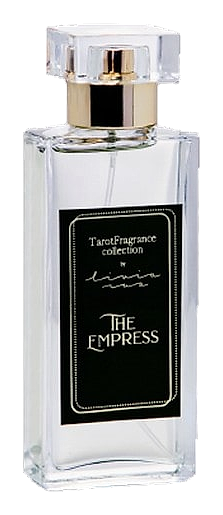
The Empress arrived in 2020 as half of Livia Rus's debut pair, launched alongside The Emperor to form a thematic duo about sovereignty and archetype. Perfumer Dario Fini composed it, and the naming makes its intent plain: this is the feminine counterpart in a power dyad, the regent to the ruler. The brand entered perfumery that year with two fragrances and a conceptual framework built around duality, historical resonance, and the deliberate inhabiting of a role.
What's interesting is how the composition subverts the name. You'd expect something floral, something ornate, something that performs femininity loud. Instead, saffron and jasmine open sharp and almost spicy, then almond steps in with a marzipan hush that has more in common with skin-warm gourmand than with traditional bouquet. The musk at the heart is animalic-coded, grounded, animal-warm rather than soapy-clean. This Empress rules from bone-deep authority, not from ornamentation.
The evolution
The first 20 minutes belong to saffron. It arrives with a metallic, almost leathery heat, lifting jasmine into something that reads more as incense than as white-flower sweetness. There's a brief window where the composition feels entirely dry and spiced, closer to a scent you'd associate with smoke and saffron threads. Then the almond breaks through, somewhere around the 45-minute mark, and the whole thing shifts into its middle register. The marzipan note softens every edge that was there before. Musk arrives simultaneously, not white-clean but skin-warm, slightly furred, sitting close to the body in a way that feels like fabric rather than skin. By hour two, the jasmine has almost completely disappeared. What's left is the almond-musk accord behaving like a second skin.
Cultural impact
The Empress fits into a category of niche compositions that use almond and animalic musk as their core identity rather than as a supporting gesture to a more conventional floral or gourmand structure. Its accord profile (woody-amber, almond-forward, with musk as a major signature rather than a clean white variant) places it closer to the territory of wearers who want presence without sweetness, warmth without overt gourmand cues. The Tarot Fragrance Collection naming positions it as part of an archetype-driven series rather than an abstract olfactory exercise.