The Story
Why it exists.
The beginning
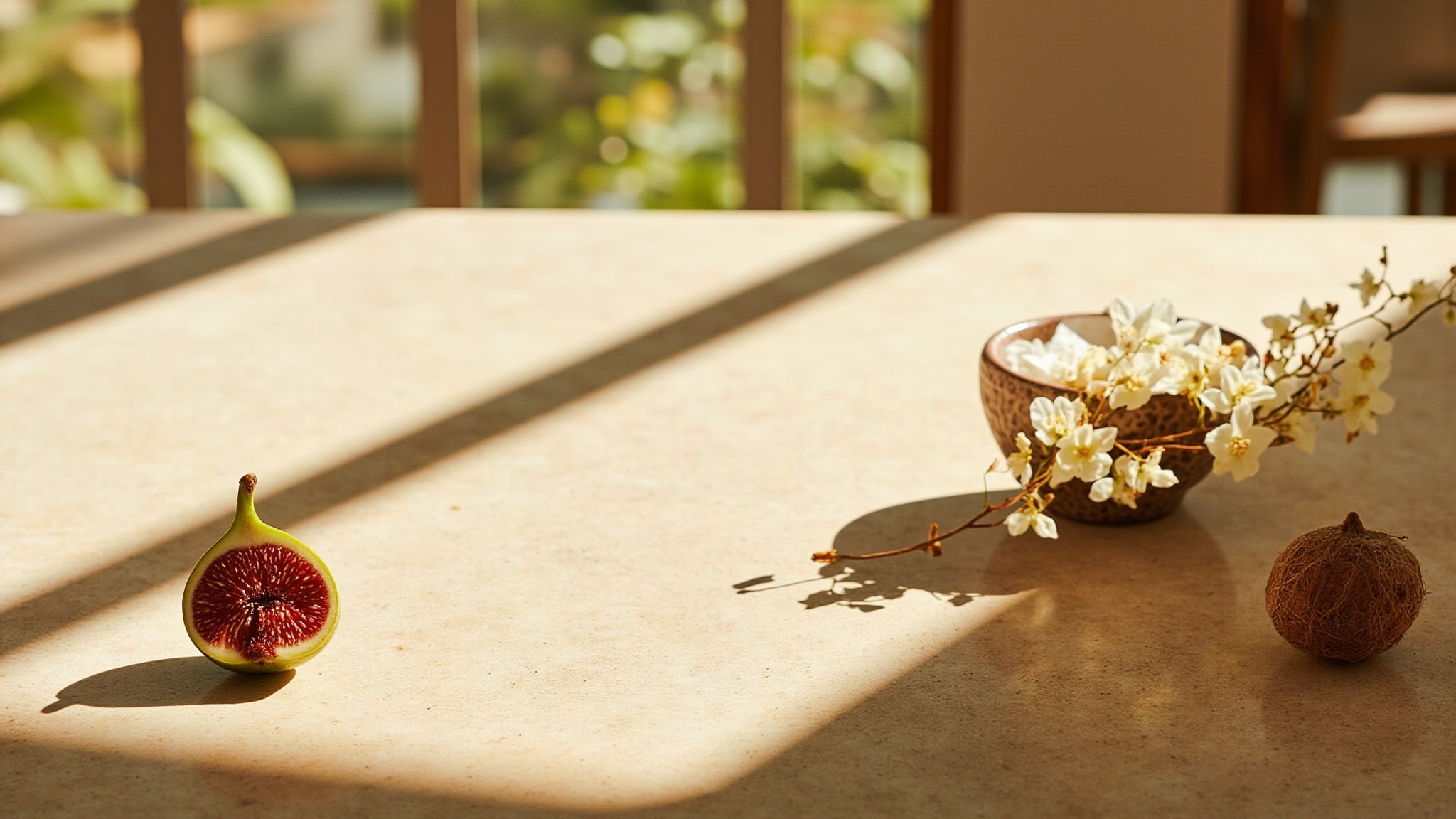
Tuscan Fig emerged in 2007 from a collaboration between Lisa Hoffman Beauty and perfumer Ellen Molner. The assignment: translate a specific place into scent. Molner chose Tuscany not for its postcard pull, but for its particular warmth, the way late afternoon light sits over fruit groves and doesn't move for hours. The brief called for something delectable, approachable, and unmistakably Mediterranean. Molner reached for fig as the anchor because it carries both the green and the ripe, both the leaf and the fruit. Vanilla and coconut leaf built the warmth around it. The result is a fragrance that smells like the idea of a warm place, not just a realistic rendering of one.
What makes Tuscan Fig interesting is how its coconut note behaves. In perfumery, coconut often arrives as sunscreen, synthetic, loud, summer-camp. Here, the coconut leaf anchors against vanilla and amber, reading as something closer to the green fringe of a palm than the processed milk in a bottle. It gives the fragrance a slightly woodier character than its sweet heart might suggest, keeping the composition from becoming purely dessert. The honeysuckle adds a nectar quality, sweet but garden-grown, not confectionery. It's this tension between gourmand warmth and green restraint that keeps the fragrance from feeling one-note, even as vanilla and coconut dominate the drydown.
The evolution
The opening announces fig immediately, green, slightly watery, the actual fruit. Coconut leaf arrives within thirty seconds, keeping things bright rather than creamy at the start. There's no delay, no hesitation. The heart takes over around the ten-minute mark as honeysuckle and gardenia emerge, their white floral richness amplifying the sweetness already in the air. Jasmine sits underneath, adding a faint animal warmth that stops the florals from reading as soapy. By the hour, vanilla and amber have claimed the foreground. The coconut deepens into something creamier, less green. The drydown holds for another three to four hours as a skin-close warmth, vanilla, coconut, a whisper of honeyed wood, and musks that feel intimate rather than projectional. It doesn't fill a room. It stays with you.
Cultural impact
Tuscan Fig arrived in 2007 during a pivotal era when niche perfumery began its mainstream transition. Lisa Hoffman Beauty positioned the fragrance as an approachable entry into artisan-quality scents, democratizing sophisticated fragrance during the mid-2000s when gourmand and food-inspired notes were gaining cultural momentum. The warm vanilla and coconut combination captured the era's obsession with comfort and escapism, qualities that have only deepened in relevance since 2007, making the fragrance a lasting cultural artifact of its time. The fig-coconut-vanilla triad established a template for tropical warmth that would define a generation of subsequent releases, influencing how consumers and perfumers alike approached warm, edible fragrance compositions.