The Story
Why it exists.
The beginning
Lacrima, the Latin word for tear. Anne-Sophie Behaghel composed this fragrance as part of Les Liquides Imaginaires' Les Humeurs collection. The name itself signals something private, something caught between language and feeling. Tears are intimate. Tears are what happens when feeling exceeds language, and this fragrance seems to understand that threshold. The work draws on emotion as its starting point, translated into something you could wear against your skin. It's a perfume that doesn't announce itself so much as it settles into presence, becoming part of the wearer's own quiet landscape.
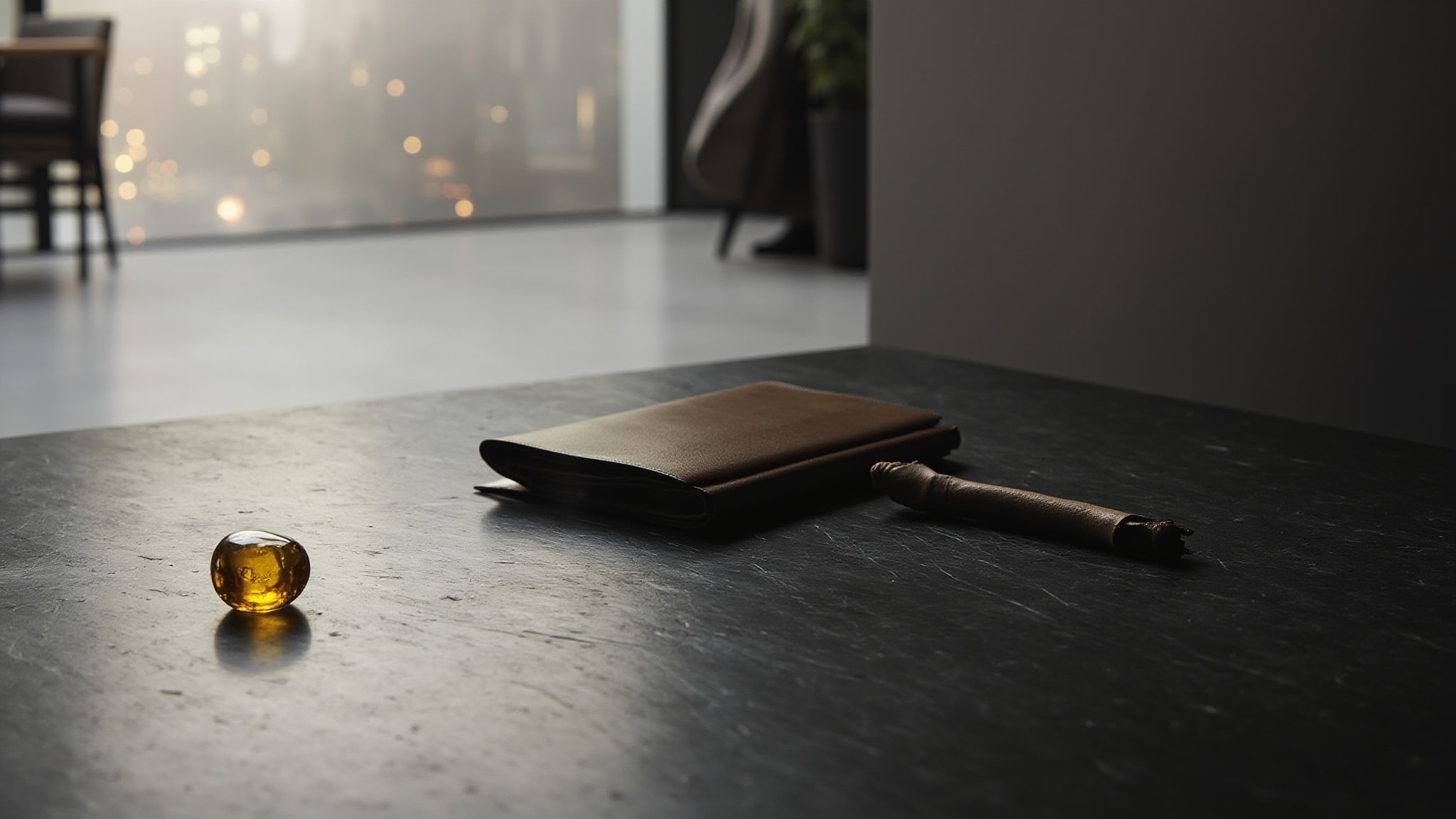
The base is where Lacrima earns its name. Benzoin and moss create a warm, earthy foundation, the smell of something lived in, of spaces held close. The benzoin brings a resinous sweetness that softens the dryness of the moss, creating depth without heaviness. Labdanum adds a resinous amber quality that catches light without announcing itself, lending the composition an almost luminous quality in its quieter moments. Then there's castoreum. Derived historically from beaver, this material carries a leather-animalic signature that brings a distinctive edge to the composition.
The evolution
The aldehydes hit first, bright and almost astringent, a flash of cold clarity before the warmth arrives. Pink pepper prickles at the edges for the first ten minutes, then softens into the elemi resin at the heart. The transition isn't dramatic. It's the kind of quiet shift that happens without announcement, the top notes gently yielding to what lies beneath. By hour three, the castoreum and benzoin have taken over, and the fragrance becomes something else entirely: close, smoky, mossy, the kind of smell that lingers on fabric long after you've left the room. The drydown holds its character for several hours, maintaining that warm, animalic presence that defines Lacrima's identity.
Cultural impact
Lacrima sits in the Les Humeurs collection alongside compositions exploring specific emotional registers. The collection offers a counterpoint to some of the house's more expansive thematic work, presenting something quieter, more human in its concerns. The fragrance has found its audience among those who appreciate perfume as a form of personal expression rather than mere decoration. Within the broader landscape of niche perfumery, it occupies a distinctive position that continues to draw attention from those seeking something beyond the conventional.