
The Story
Why it exists.
The beginning
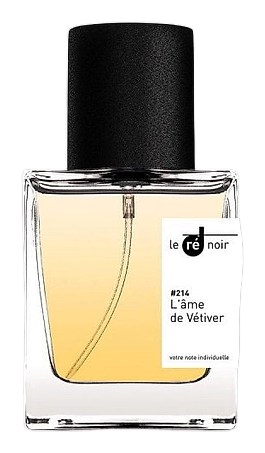
Valery Sokolov founded Le Ré Noir in the mid-2010s as a laboratory for olfactory experimentation, uninterested in seasonal collections or safe compositions. L'âme De Vétiver arrived in 2017 as a direct challenge: rather than using vetiver as a supporting player, Sokolov wanted to expose its hidden animalic core. The name, French for 'the soul of vetiver,' signals an intent to excavate the root's primal character rather than decorate it. Castoreum and civet were chosen specifically to amplify the vetiver's earthier qualities, turning what could be a straightforward green note into something far more confrontational.
Sokolov's philosophy with L'âme De Vétiver is to refuse comfort. Every material in the eleven-note heart serves a specific purpose: vetiver for structure, castoreum and civet for animalic depth, amber and sandalwood for warmth, oakmoss for texture, patchouli for shadow, bergamot and neroli for fleeting brightness, cardamom and spicy notes for heat. The result is a fragrance where the soul of vetiver is not polished or gentled but amplified to its most honest, most challenging expression.
The evolution
A bergamot-neroli pulse opens the fragrance with a fleeting green-floral brightness before the heart engulfs everything. Within minutes, castoreum and civet assert their presence, wrapping around the vetiver in a warm, animalic embrace that feels clinical and primal simultaneously. Amber and sandalwood soften the edges without neutralizing the rawness. Cardamom and spicy notes introduce a dry heat that contrasts with the creaminess of sandalwood. As the hours pass, the animalic elements persist at skin level while oakmoss and patchouli ground the composition in a mossy, earthy finish that extends the soul of the fragrance long past the initial impression.
Cultural impact
Since its 2017 debut, L’âme De Vétiver has become a reference point for modern vetiver compositions, influencing both niche houses and mainstream brands to explore animalic undertones with scientific precision. Its bold use of castoreum and civet sparked discussions about ethical sourcing, while the citrus‑spice opening resonated with a generation seeking contrast between bright and earthy. Over the years, the scent has appeared in runway shows, art installations, and curated playlists, cementing its role as a cultural touchstone that bridges avant‑garde perfumery with accessible storytelling.