The Story
Why it exists.
The beginning
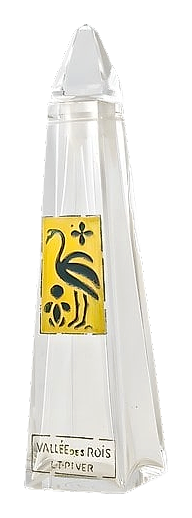
Vallee des Rois arrived in 1923 from L.T. Piver, a house whose roots reach back deep into the history of French perfumery, well before this composition reached its bottle. The name translates to Valley of the Kings, an echo of ancient Egypt and the romance of treasures buried in sand, though the scent itself stays closer to the powder room than the pharaoh's tomb. It was crafted for women, during the interwar years when Paris perfumery balanced ornate florals against the cleaner structures that modernism was beginning to demand. The Baccarat crystal bottle it was dressed in signals where the house placed its ambitions: serious glasswork, serious juice.
What makes Vallee des Rois interesting isn't a single exotic material but the restraint of the composition. The source material available offers no formal note list for the fragrance, which leaves its character to be read from the bottle, the era, and the house's general sensibility rather than from any confirmed pyramid. That gap is part of the appeal.
The evolution
The opening arrives almost hushed, a breath of soft floral material dusted with something faintly metallic, like the inside lid of a vintage compact. There is no citrus shout, no aldehyde burst. It simply starts being there, settling onto the skin with the confidence of a composition that never needed to announce itself. Over the first half hour the texture shifts, moving from that cool, slightly metallic first impression into a fuller, more rounded warmth. The florals begin to declare themselves without ever shouting, each one keeping the others in check. By the second hour the softer, creamier base notes begin to surface, lending a woodier cast to the whole arrangement. From five hours in it settles into a close, intimate skin-scent that stays with the wearer rather than broadcasting to a room. The fragrance has a way of behaving politely without ever feeling timid.
Cultural impact
Vallee des Rois sits in a particular register of French perfumery that has become increasingly rare on the modern market: the kind of composed, blended floral that was assumed rather than explained. It belongs to a lineage of fragrances that took the wearer's taste for granted, offering a finished thing rather than a sales pitch. Wearing it today places the wearer inside that older conversation, the one about what a French floral was supposed to be when the category still had clear, unspoken rules.




















