
The Story
Why it exists.
The beginning
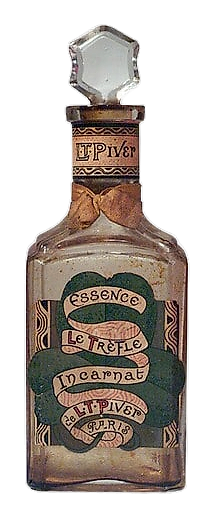
Trèfle Incarnat translates to incarnate clover, that red-bloomed field flower the French call trèfle incarnat. Georges Darzens created the fragrance for L.T. Piver in 1898, and the composition captures the green, slightly hay-like sweetness of the bloom. Its quiet pastoral presence comes through in the way the scent unfolds on skin, giving the wearer a sense of the flower's natural character. The result is a fragrance that honors clover with care, reflecting the tenderness of a still life study.
What's unusual here is the directness. Clover isn't a common perfumery note, it doesn't shout, it doesn't project aggressively, and it doesn't offer the immediate gratification of citrus or rose. The composition builds around a green clover heart, letting it breathe between a spiced opening and a woody base. The interplay creates a fragrance with pastoral qualities, evoking the fresh, natural essence of clover fields. Its understated character makes it a quiet companion rather than a statement piece.
The evolution
The opening arrives green and immediate, not sharp, but fresh in the way that clover is fresh, with a hint of the spice that will come. Within the first hour, the floral heart opens, sweeter than the top, warmer too. The woody base doesn't rush. It arrives gradually, settling under the clover like a foundation, adding depth without heaviness. As time passes, the composition softens: the green fades, the spice mellows, and what remains is a warm, dry, slightly sweet woodiness that lingers close to the skin. The drydown offers staying power, a quiet trace that endures without overwhelming.
Cultural impact
Trèfle Incarnat occupies an unusual position: a discontinued 1898 composition that features an unusual botanical subject. Clover as a named note is rare in contemporary perfumery, and its use in this vintage fragrance represents a choice that prioritizes distinctive character over commercial appeal. The scent appeals to those drawn to fragrance as a form of quiet connoisseurship, someone who doesn't need their scent to announce itself to the room.