Georges Darzens
Auguste Georges Darzens arrived in Paris from Moscow in 1885, bringing with him a rigorous scientific education that would eventually bridge the gap between laboratory chemistry and artistic perfumery. A brilliant organic chemist by training, Darzens served in the French army before establishing himself as one of the most innovative minds in early fragrance chemistry. His discovery of amyl salicylate in 1896—an aromatic compound with a soft, orchid-like quality—caught the attention of Jacques Rouché, artistic director at the prestigious house of L.T. Piver. The two formed a creative partnership that would define a generation of French perfumery, combining Darzens's scientific precision with Rouché's artistic vision. Though less celebrated than perfumers who followed, Darzens's technical contributions laid groundwork that many subsequent fragrances would build upon. He continued his work at the intersection of chemistry and fragrance until his death in 1954, leaving behind a body of work that remains influential among those who study the craft's foundations.
The hits
Notable creations

The signature
How Georges composes
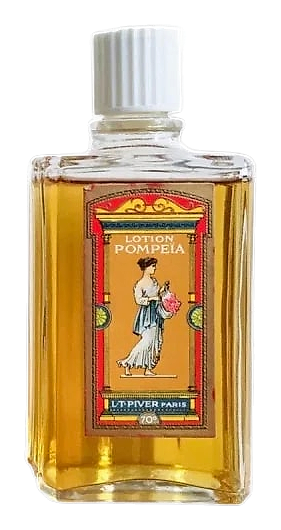
Darzens's signature technique involved treating fragrance construction like architectural problem-solving—he built compositions with structural integrity rather than relying solely on aromatic impression. His work with salicylates and ester compounds gave his creations a smoothness that contemporaries sometimes struggled to achieve. He favored warm, enveloping materials that blended seamlessly rather than competing for attention. The Pompéia fragrance, his most documented creation, demonstrates this approach: a carefully balanced composition where no single element dominates, yet the whole remains memorable and distinctive. His preference for scientifically precise formulation meant each of his fragrances maintained consistency that was rare for the era.
Philosophy
What drives Georges
Darzens believed that perfumery was fundamentally a science of transformation—taking raw materials and through precise combination, creating something greater than its parts. His approach prioritized understanding the molecular behavior of ingredients before attempting to compose with them. Rather than composing intuitively, he insisted on knowing why materials interacted as they did. This scientific rigor did not diminish his appreciation for beauty; instead, it deepened his respect for the art form's complexity. He viewed fragrance as a language that could be parsed and understood at the molecular level, making him an early proponent of what we might now call evidence-based perfumery.
The houses