Pierre Armigeant
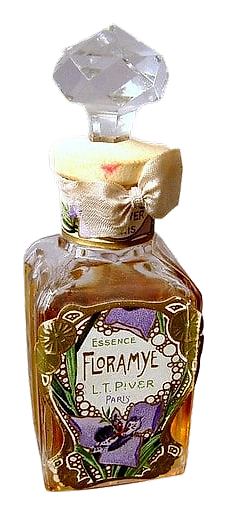
Pierre Armigeant belonged to a generation of French perfumers who shaped the industry before it became a global phenomenon. Active from 1874 to 1955, he spent much of his career attached to L.T. Piver, one of Paris's oldest and most respected perfume houses. His work on FLORAMYE in the early 20th century demonstrated a rare command of both natural materials and emerging synthetic compounds. Unlike many of his contemporaries who guarded their methods jealously, Armigeant routinely collaborated with chemists, treating perfumery as a partnership between art and science. His partnership on FLORAMYE exemplified this belief—the perfumer contributed the creative vision while his collaborator handled formulation chemistry. In an era when perfumers rarely received public recognition, Armigeant's name endured in fragrance history through the quality of his work rather than marketing. He witnessed perfumery evolve from small artisanal workshops to the sophisticated industry it would become mid-century, adapting his craft without abandoning the classical training that defined French fragrance excellence.
The hits
Notable creations
The signature
How Pierre composes
Armigeant's classical French training showed in FLORAMYE's structure: rich floral heart notes anchored by a substantial base, built with the careful layering techniques that defined early 20th century perfumery. He worked extensively with natural materials—rose, jasmine, and the aromatic woods popular at Piver—while remaining curious about the new synthetic molecules becoming available. His compositions favored balance over boldness, creating fragrances meant to evolve gracefully rather than announce themselves aggressively. The Piver house aesthetic influenced his style, but he brought enough individual character to leave his fingerprints on everything he touched.
Philosophy
What drives Pierre
Armigeant believed that perfume creation demands partnership rather than solitary genius. He approached each formulation as a dialogue between artistic instinct and scientific precision, routinely engaging chemists to test and refine his concepts. This collaborative spirit set him apart in an industry where knowledge often remained locked within individual houses. Rather than chasing trends, he seemed guided by a commitment to timeless construction—fragrances built to last, to develop gracefully on skin, to represent their era with integrity. His work suggests someone who understood that a great perfume requires both the spark of creativity and the discipline of technical mastery.
The houses