The Story
Why it exists.
The beginning
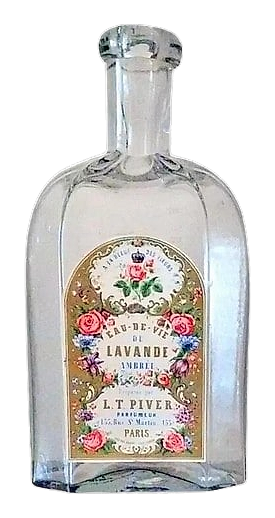
In 1912, L.T. Piver released Eau de Vie de Lavande Ambrée. The name itself promises two things: lavender as the backbone, and ambrée, the amber warmth that gives the lavender depth. Released into a catalogue known for restrained, deliberate compositions, this fragrance signals intent rather than novelty. A lavender made for someone who wanted the plant steeped in warmth, not the fresh flower as it grows. The composition draws on four notes: lavender, carnation, cedar, and amber, and each one plays a specific role in shaping the final impression on skin. The lavender opens cool and slightly sharp, the way dried lavender buds smell when you crush them between your fingers, herbal and a little medicinal at first.
What makes this composition distinctive is its deliberate structure. The four notes work together without any decorative top to distract from the central relationship between lavender and carnation. Carnation oil carries its own warmth, a clove-like facet that bridges floral and spice without committing fully to either direction. Paired with lavender, the carnation rounds out the herbaceous sharpness and adds a soft, almost powdery edge where the two meet.
The evolution
The opening is almost monastic. Lavender hits the skin the way it does in a linen cupboard, cool, slightly sharp, a little medicinal, with that distinctive herbaceous clarity that comes from the flower itself rather than any embellishment. The carnation surfaces as the initial sharpness softens, arriving warm, faintly peppery, the clove facet unmistakable. This is where the fragrance stops reading as a straightforward herbal composition and starts becoming something more private, more layered. The cedar builds underneath, giving the whole composition a wooden spine, a dry structural note that keeps the warmth from becoming too sweet. As the hours pass, the amber takes over. It doesn't shout. It settles in, golden and slightly resinous, the way labdanum smells when warmed on skin, and pulls the lavender and carnation down with it into a single coherent impression.
Cultural impact
Eau de Vie de Lavande Ambrée sits in a narrow category of vintage French lavender compositions that treat the material seriously as a base note rather than a fleeting top. The carnation heart gives it a distinct character, bridging floral and spice in a way that defines its place within the broader catalogue. For collectors, it represents a specific moment in the house's history. For wearers, it offers a way to experience lavender composed with intention, where the plant's herbal sharpness is tempered by warmth rather than masked by brightness.