The Story
Why it exists.
The beginning
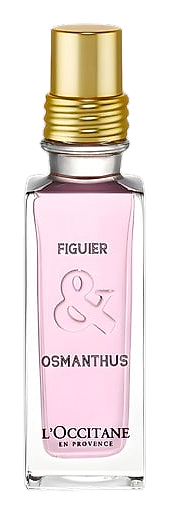
In 2015, perfumer Karine Dubreuil-Sereni reached for two botanicals that rarely share space in the same bottle. Fig leaf, with its green, milky character. Osmanthus, whose small golden flowers carry a distinctive apricot-leather warmth. The pairing sounds obvious for a Provençal house, until you smell how it actually works. L'Occitane has always treated the garden as the raw material, the starting point. Here, the garden became the argument: a fragrance built from the tension between tree and blossom, between green stems and golden flowers, between the earth beneath and the light above.
What makes this composition interesting is how the materials fight and then reconcile. Fig leaf carries an inherent milkiness that can tip a fragrance into coconut or skin-soap territory. Osmanthus, meanwhile, has a waxy, almost animalic facet that most perfumers soften or hide. Here, neither retreats. The fig keeps its green honesty throughout, while the osmanthus holds its apricot-gold warmth without apology. The result sits slightly off-center from what you'd expect, neither purely green nor purely floral. It reads as a garden at a specific hour: not dawn, not dusk, but the long afternoon when everything is warm and nothing is rushed.
The evolution
Blackcurrant opens bright and tart, berry-sweet in the way that makes you lean closer. Bergamot lifts it, keeps it from getting heavy. Within minutes, fig leaf arrives, not the coconutty fig of some interpretations, but the green, slightly milky note of the leaf itself, wet with something mineral. The handoff happens smoothly: blackcurrant fades, bergamot retreats, and osmanthus begins its slow emergence. This is the heart of the fragrance. Golden. Waxy. Apricot without fruit. Powdery in the way that warm skin gets powdery. Cedar appears around the 2-hour mark, dry and quiet, keeping company with musk that stays close and never announces itself. By the end, you're left with a faint warmth, osmanthus and cedar, skin and something green. It lasts 4-6 hours on most, closer to skin than room-filling.
Cultural impact
Figuier & Osmanthus occupies a quiet corner of the L'Occitane lineup, neither a hero product nor an afterthought. It appeals to wearers who want botanical authenticity without projection or performance. The fig-osmanthus pairing remains somewhat unusual in mainstream perfumery, which gives it a specific following: people who want something recognizable as a garden scent but less common than rose or jasmine.