
The Story
Why it exists.
The beginning
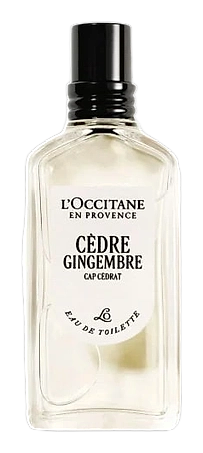
L'Occitane en Provence translates the botanical traditions of southern France into fragrance. Founded in 1976 by Olivier Baussan with wild rosemary and lavender essential oils distilled from a truck-mounted still, the house built its identity on the aromatic landscape of Provence. Lavender fields, rosemary hedges, limestone warmed by Mediterranean sun. Cèdre Gingembre pulls from a different terrain entirely: the place where the Mediterranean crashes against rocky peninsulas, where sea spray mingles with wind-battered scrub and ancient cedar trees cling to coastal cliffs. The name references those Mediterranean cedar stands, not a metaphorical idea of wood. Massé works in this geography, building from the real sensory character of coastal cedar rather than an abstract woody impression.
The pairing strategy here rests on restraint. Citron supplies the Mediterranean brightness without needing added sweetness. Violet leaf provides the green freshness without slipping into cucumber or generic herb. Cedarwood offers the woody depth without resorting to smoke or synthetic substitutes. Each note does one thing and does it cleanly. Massé approaches the composition with clear intention, refusing to layer on complexity that would muddy the structure. This is a fragrance built for wear rather than scrutiny, for daily use rather than special occasion. The violet leaf and cedar pairing creates an unexpected botanical coolness that feels more sophisticated than the price suggests.
The evolution
The opening arrives as a clear, immediate statement: citron bursting with Mediterranean brightness, juicy and clean, the kind of citrus that reminds you why the genre endures. Within minutes the character shifts. Violet leaf enters the composition, bringing a cool, dewy green quality that feels like crushed stems on a spring morning. The freshness here is tangible and slightly metallic, not the typical cucumber or generic green but something more interesting and specific. Violet leaf settles into the heart as the dominant middle note, offering garden transparency rather than floral sweetness. The drydown marks a definitive turn. Cedarwood arrives with the dry, pencil-shaving warmth that defines the fragrance for hours after application. The citrus is entirely gone by now, replaced by an aromatic woody signature that feels grounded and composed. The real character of Cèdre Gingembre lives here, in the cedar, which is why patience rewards the wearer.
Cultural impact
Since its 2016 debut, Cèdre Gingembre has quietly reshaped the French coastal fragrance scene, offering a breezy alternative to heavier orientals. Its crisp citron‑mint opening paired with cedar‑ginger depth resonated with younger urban dwellers seeking a scent that feels both fresh and grounded. Over the years, community forums have noted its role in sparking a trend toward minimalist, nature‑inspired colognes, influencing several indie houses to explore similar citrus‑wood blends. The fragrance’s modest sillage and moderate longevity made it a staple for daily wear, reinforcing a cultural shift toward understated elegance in everyday perfumery, while still honoring L'Occitane’s Provençal heritage.