
The Story
Why it exists.
The beginning
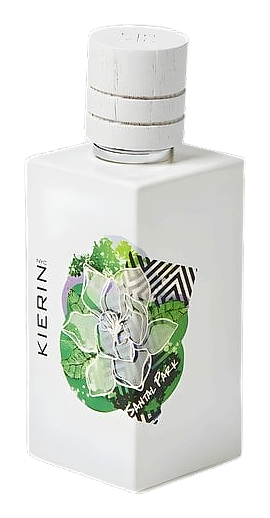
Mona Maine de Biran designed Santal Park around a single observation: the most peaceful moments in New York happen above the street, in that elevated quiet where city noise becomes a kind of insulation. A rooftop garden. The particular stillness that exists only when you're surrounded by the city's buzz but momentarily removed from it. The brief was simple, translate that feeling into scent. Not a fantasy island. Not a countryside that doesn't exist. Just the green that survives despite everything.
What makes Santal Park unusual is how it handles its materials. Gardenia, notoriously fragile, notoriously fleeting, anchors the composition here. Most fragrances use it for a bright, fleeting sparkle. Santal Park treats it as a foundation. The oakmoss and vetiver create the earthy, green structure beneath it, while sustainably sourced sandalwood smooths everything into something that reads as calm rather than chaotic. It's an urban garden, not a wild one. Everything is intentional.
The evolution
The first spray hits clean and bright, saffron's warm spice announcing itself before the gardenia fully opens. Twenty minutes in, the white floral takes over, but it's not a typical gardenia soliflore. The oakmoss and vetiver ground it, keep it from floating away into something delicate and forgettable. By the hour mark, the composition has settled into its real character: green, mossy, quiet. The sandalwood emerges last, not as a dominant force but as a smoothing agent, the cream that ties everything together. The drydown reveals itself gradually, each hour stripping away another layer until only the essential green heart remains, soft and persistent against the skin.
Cultural impact
The launch of Santal Park aligned with a cultural moment where fragrance lovers sought scents that felt personal rather than performative. The gardenia-forward composition stood apart from the oud and ambroxan-heavy releases dominating the market. The scent offered something greener and more contemplative, with an intimate sillage that appealed to wearers who wanted fragrance as a private detail rather than a public announcement. Its emphasis on quiet presence reflected this movement, where the goal became scent memories rather than scent statements.