
The Story
Why it exists.
The beginning
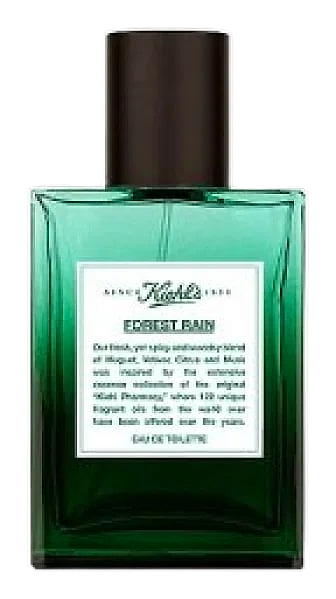
Forest Rain arrived in 2008, a green-fresh, woody aromatic from Kiehl's that aimed straight at the moment humidity cracks the heat. The name is the brief. Rain hitting forest floor. No myth, no muse, no overblown concept. Just the smell of wet earth and the instinct to bottle what most fragrances leave behind. It reads like olfactory weather reporting, clean and direct, the kind of scent that doesn't ask for your attention so much as place you somewhere specific. A walk through trees after the sky opens up. Green in the way that actually means green, not the abstract idea of it, but crushed leaves and damp moss and the cold mineral edge of water soaking into soil. The fragrance classifies as Woody Aromatic on paper, but that label undersells how atmospheric it gets once it's on skin.
What's worth noting is the restraint. Just citrus up top, lily of the valley in the middle, and a base of vetiver and musk. The vetiver gives it the rain-soaked soil quality, root-heavy and slightly bitter, the part that keeps the composition from floating off into generic freshness. The musk keeps the whole thing from disappearing into abstraction, adding a subtle warmth that grounds the green. It's a four-note structure doing the work of twice that, each element pulling weight without crowding the others.
The evolution
The opening minutes are the loudest: citrus and green, bright and almost sharp, the way air smells right before a downpour. There's a clarity to it that feels atmospheric more than aggressive, like standing at the edge of a storm before the first drops land. Then the lily takes over, white and slightly cool, but not soapy. It reads closer to actual flowers in a damp garden than to any perfume idea of muguet, a realness that sets this composition apart from the usual interpretations of the note. The vetiver emerges as the hours pass, and the whole composition shifts from fresh to grounded, wet earth replacing the brightness of the top. The musk builds underneath, warmer than expected, and eventually the scent settles into something quieter and more personal, something that smells closer to skin than to any forest.
Cultural impact
A petition to bring back Forest Rain circulated among Kiehl's customers, gathering hundreds of signatures and reflecting how much this unassuming composition meant to the people who wore it. The fragrance occupied a specific niche: accessible, green, rain-forward, priced far below the boutique options chasing similar territory. What set it apart from the beginning was how literal it dared to be. Rather than abstracting the idea of rain through ozonic chemicals or synthetic aquatic notes, it leaned into vetiver and wet-earth character, creating something that smelled less like a concept and more like a moment.