
The Story
Why it exists.
The beginning
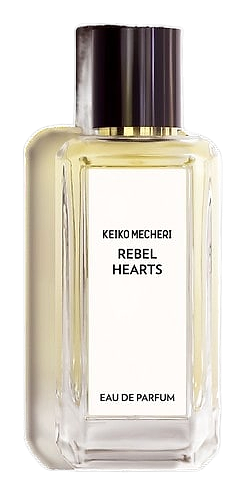
Keiko Mecheri launched Rebel Hearts in 2018, joining a lineage of feminine gourmands that began nearly two decades earlier with Loukhoum. That earlier fragrance became something of an accidental landmark, an almond-rose-tobacco confection that defined a genre before anyone had a name for it. Rebel Hearts arrives as its quieter, more controlled sister. The brief was simple: return to the house's signature territory, but with less weight and more air. To honor the original trailblazer while charting a different course entirely.
What makes Rebel Hearts structurally interesting is how its notes repeat across the pyramid. Amaretto appears in the top, the heart, and whispers through the base. Vanilla does the same, arriving as Madagascar in the opening, reappearing as Bourbon in the heart, and settling as caramel in the drydown. It's not a pyramid so much as a spiral, the same materials returning at different intensities, building depth through accumulation rather than contrast. The oud reads more as warmth than smoke here, lending the composition a honeyed quality rather than any darkness. Toffee, too, keeps things edible rather than mysterious.
The evolution
The opening arrives with bright citrus and a recognizable amaretto punch, sweet, almond, almost cherry-like. That initial hit holds for roughly 30 minutes before the Turkish rose begins to unfurl, tempering the sweetness with a powdery floral elegance. Madagascar vanilla and toffee move in next, building a heart that smells like something you'd want to eat. Benzoin and patchouli appear here too, adding a resinous, slightly earthy counterweight to all that sweetness. By hour three, the composition settles into a vanilla-oud drydown with caramel staying close to the skin. Moderate sillage means it never announces itself, it just lingers. Most skin types will get 6 to 8 hours, with the sweet warmth detectable well into the next morning on fabric.
Cultural impact
Rebel Hearts occupies a particular corner of niche perfumery, for those who love Loukhoum but find it overwhelming, and for newcomers curious about the house's signature style. The 2018 release positioned itself as an accessible entry point into a genre that Keiko Mecheri essentially created for American niche audiences. It's not trying to reinvent the wheel; it's refining it.